The biofilm challenge: recurren infections and profitability issues
A biofilm is understood as a community of microbial populations that stably attach to inert or living surfaces by deploying a self-regulated matrix of extracellular polymeric substances (EPS) (Araújo et al., 2024). This architecture creates a protective shield for bacteria, significantly increasing their resistance and tolerance to antimicrobial treatments (Araújo et al., 2024). By remaining aggregated in a confined space, bacteria optimize their chances of survival by facilitating the transfer of nutrients and genetic material, as well as enhancing their intercellular communication mechanisms (Ban-Cucerzan et al., 2026).
The persistence of these bacterial structures directly impacts animal health status, the spread of antibiotic resistance, internal biosecurity protocols, and the safety of the final product intended for consumption. All of this triggers an increase in treatment costs as well as risk prevention measures, compromising livestock profitability. For this reason, deciphering the mechanisms of formation, survival, and interaction of biofilms with daily farm tasks is key to understanding the recurrence of pathologies, the repeated use of pharmaceuticals, and the shortcomings of traditional disinfection methods in livestock environments (Ban-Cucerzan et al., 2026; Araújo et al., 2024).
Livestock facilities combine physical, biological, and management factors that foster the sustained development of biofilms across various surfaces. Unlike experimental settings or human medicine, livestock environments are characterized by constant humidity, continuous organic matter input, infrastructure networks that are difficult to sanitize, and an uninterrupted flow of pathogens through animals, feed, water supplies, and farm workers themselves (Ban-Cucerzan et al., 2026).
Within this matrix present in livestock farm pipelines, there are active bacterial cells metabolically functional undergoing active multiplication and normal growth (Zhang et al., 2018). Although they usually display higher sensitivity to the direct action of disinfectants, their high density within the structure facilitates the continuous spread of the microbial community (Zhang et al., 2018). On the other hand, there are VBNC (viable but non-culturable) cells, which enter a state of dormancy or metabolic lethargy as a survival mechanism under adverse conditions, such as nutrient scarcity or exposure to chemical disinfectants (Zhang et al., 2018). This dormant state grants them greater tolerance to antimicrobial agents and stimulates a higher rate of genetic mutations, favoring the emergence of resistance and allowing them to reactivate once environmental conditions become favorable again (Zhang et al., 2018).
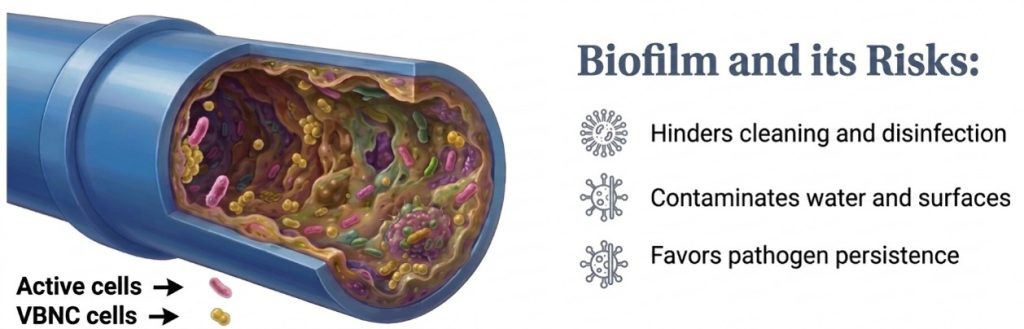
Figure 1: Simplified diagram of biofilm composition (Adapted from Zhang et al., 2018).
Given the complexity of these matrices, environmental biofilms are structurally integrated into livestock production systems, making their complete eradication rarely achievable under real farm conditions. Therefore, risk reduction, rather than elimination, constitutes the most practical objective. The management of environmental biofilms must be conceived as a continuous risk management process, rather than a problem with a definitive solution.
BIŌNTE® QUIMITŌX® LIVŌX®: Remarkable antimicorbial capacity
BIŌNTE® QUIMITŌX® LIVŌX® is a liquid solution designed to protect animals against physiological and environmental stressors. Thanks to its exclusive formulation, rich in bioactive polyphenols derived from grape and olive extracts, it features antioxidant, anti-inflammatory, and antimicrobial properties for a rapid response via drinking water.
The synergy among its extracts makes BIŌNTE® QUIMITŌX® LIVŌX® an advanced natural ingredient-based solution designed to support the animal’s natural defenses and balance mechanisms. Furthermore, given its antimicrobial properties and administration through drinking water, BIŌNTE® QUIMITŌX® LIVŌX® is positioned as a potential mitigating agent against biofilm formation in livestock farm water distribution systems.
In this context, this in vitro study was conducted in collaboration with Microlab Biotech from the University of Valencia (Spain) to validate the capacity of BIŌNTE® QUIMITŌX® LIVŌX® to inhibit the growth of microorganisms involved in biofilm formation. Specifically, the bacteria Listeria monocytogenes, Staphylococcus aureus, and Escherichia coli were selected for this study as key agents linked to this type of risk, which are closely associated with impaired livestock health and compromised production performance.
Experimental Design
To evaluate the antimicrobial capacity of BIŌNTE® QUIMITŌX® LIVŌX®, an in vitro antagonism assay was carried out using the agar diffusion technique. This procedure relies on the diffusion of a specific microorganism in the solid medium and is based on the solution’s ability to halt the development of the evaluated microorganism, such that the potency of the antimicrobial activity is directly proportional to the size of the generated inhibition zone.
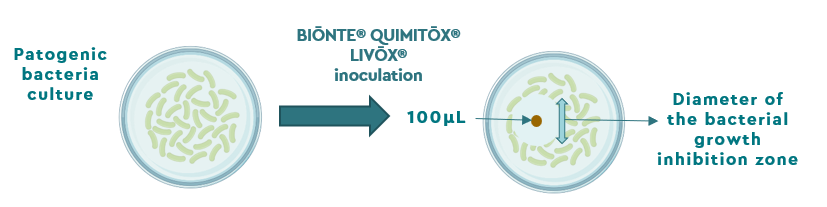
Figure 2: In vitro antagonism assay methodology using the agar diffusion technique.
In this case, the methodology consisted of flood or spread-plating a bacterial suspension of 108 CFU/mL, specifically Listeria monocytogenes, Staphylococcus aureus, and Escherichia coli, individually. After plating, a well was created in the agar where 100 μL of BIŌNTE® QUIMITŌX® LIVŌX® was deposited, and finally, the plates were incubated at 37°C for 48 hours.
Efficacy Results
BIŌNTE® QUIMITŌX® LIVŌX® demonstrated its ability to inhibit the growth of the evaluated microorganisms involved in biofilm formation. The liquid solution generated an inhibition zone for the growth of Listeria monocytogenes and Staphylococcus aureus greater than 0.5 cm, while against Escherichia coli it formed a zone of less than 0.5 cm (Table 1).
| Pathogen | Inhibition Zone |
| Listeria monocytogenes | ++ |
| Staphylococcus aureus | ++ |
| Escherichia coli | + |
Table 1: Inhibition zone results in agar diffusion technique.
“+” inhibition zone <0.5 cm, “++” inhibition zone ≥ 0.5 cm.
Thus, this in vitro test demonstrates the efficacy of BIŌNTE® QUIMITŌX® LIVŌX® against a diverse panel of bacteria, encompassing both Gram-positive (Listeria monocytogenes and Staphylococcus aureus) and Gram-negative (Escherichia coli) pathogens. This highlights the product’s capacity to limit the growth of the different microorganisms that make up the microbial matrix accumulating in livestock farm water systems.
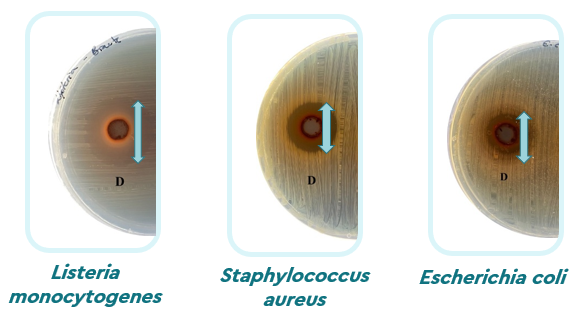
Figure 3: In vitro bacterial growth inhibition results by inoculation of BIŌNTE® QUIMITŌX® LIVŌX®.
Conclusion
Biofilms represent a threat to livestock profitability, acting as a significant risk factor in the development of antimicrobial resistance, recurrent infections, and excessive pharmaceutical use. On farms, these matrices constitute a complex and persistent structure whose complete eradication is unfeasible in real production environments, making continuous risk management a priority over total elimination.
At this point, this in vitro assay confirms that BIŌNTE® QUIMITŌX® LIVŌX® exerts a potent antimicrobial action by inhibiting the development of key pathogens. Consequently, it stands out as a natural extract-based solution that, in addition to supporting animal health and performance, serves as an effective strategic tool to mitigate biofilm formation in livestock farm water systems.