Introduction
Shrimp farming faces constant vulnerability due to high mortality rates associated with bacterial and viral pathologies, as well as physicochemical imbalances in the water. However, in recent years, the safety of aquafeed has taken center stage. While determining the exact origin of production losses is complex, recent scientific evidence underlines that mycotoxin contamination in ingredients and feed is a determining factor in the decline of yields (Bhujel et al., 2021).
The transition toward diets with a higher inclusion of plant-based raw materials, necessary to replace fishmeal, has exponentially increased the risk of mycotoxin exposure. These fungal metabolites not only compromise animal health and consumer safety but also directly impact the profitability of aquaculture operations by diminishing growth and survival parameters.
Fumonisins are among the most prevalent mycotoxins in aquaculture, given their high occurrence in corn-based ingredients and by-products (De la Torre-Hernández et al., 2014). These metabolites are synthesized by fungi of the genus Fusarium, primarily Fusarium verticillioides and Fusarium proliferatum, which produce the B1, B2, and B3 variants (Cáceres et al., 2020).
These mycotoxins negatively affect both the productive performance and the health of aquaculture species, leading to a decrease in weight gain and survival rates. In white shrimp (Litopenaeus vannamei), they have been shown to alter growth, meat quality, hepatopancreas functionality, and immune response—factors that, synergistically, compromise animal viability (Deng et al., 2010).
| EFFECTS OF FUMONISINS IN WHITE SHRIMP | ||||
| Productive parameters | Meat quality | Histopathological lesions | Immune system | |
| ↓ Weight Gain ↓ Specific Growth Rate (SGR) ↓ Survival | ↑ Myosin structural damage ↑ Muscle Fiber Degradation | ↑ Hepatopancreas Necrosis ↑ Gill Deformations | ↓ Immune Activity: ↓ Phenoloxidase Activity ↓ Superoxide Anion | |
Salazar et al., 2008; Kracizy et al., 2021
BIŌNTE® QUIMITŌX® AQUA PLUS as a strategy for shrimp farming
BIŌNTE® QUIMITŌX® AQUA PLUS is an advanced solution designed specifically for aquaculture species, offering comprehensive protection through its various modes of action. Beyond its extraordinary adsorption efficiency, driven by an optimal selection of bentonite and sepiolite that minimizes toxin bioavailability in the digestive tract, this product integrates an advanced bioprotection strategy based on key phytogenics such as curcumin and silymarin. This powerful formulation is completed by the postbiotic effect derived from the inclusion of yeast cell walls and hydrolyzed yeasts, thereby reinforcing health and productive performance in professional aquaculture environments.
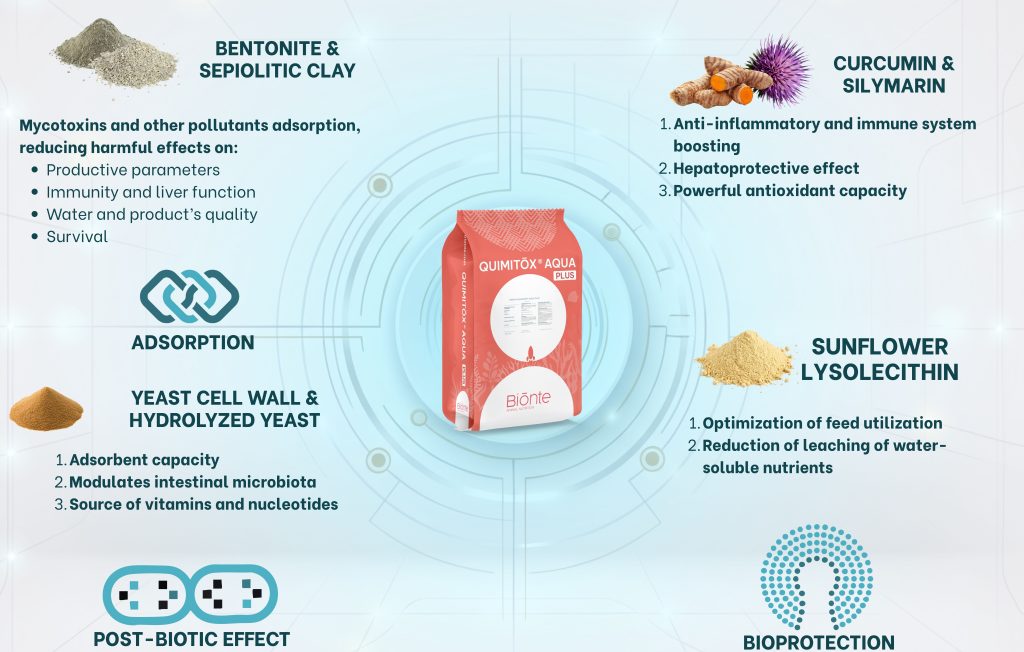
In order to evaluate the efficacy of BIŌNTE® QUIMITŌX® AQUA PLUS in white shrimp, the following in vivo study was conducted in collaboration with the Asian Institute of Technology (Thailand).
Materials and methods: Experimental design
The aim of this study was to evaluate the efficacy of different doses of BIŌNTE® QUIMITŌX® AQUA PLUS on the productive performance and health status of white shrimp. These animals were subjected to chronic exposure via diets contaminated with fumonisins B1 and B2 (FB1 + FB2) in order to determine the optimal dosage.
The experimental design was structured into four groups: a negative control (T1), with a mycotoxin-free diet, and three groups supplemented with increasing doses of BIŌNTE® QUIMITŌX® AQUA PLUS: 1 kg/T (T2), 2 kg/T (T3), and 3 kg/T (T4). In all groups, the diets featured FB1 + FB2 contamination levels of 46 ppb, achieved by adding 10% contaminated corn meal to the feed. Contamination levels were confirmed via High-Performance Liquid Chromatography (HPLC) analysis.
The study was divided into three consecutive stages: nursery, grow-out, and a final bacterial challenge. Prior to the start of these stages, a 14-day acclimatization period was conducted to ensure adaptation to rearing conditions and group uniformity. Throughout the study, physicochemical water parameters were monitored—including temperature, dissolved oxygen, and pH—thereby ensuring the stability of the culture conditions.
The nursery stage lasted 20 days. By the end of this period, monitoring focused on animal growth by measuring the length gain of the specimens, establishing the biometric baseline before starting the next developmental stage.
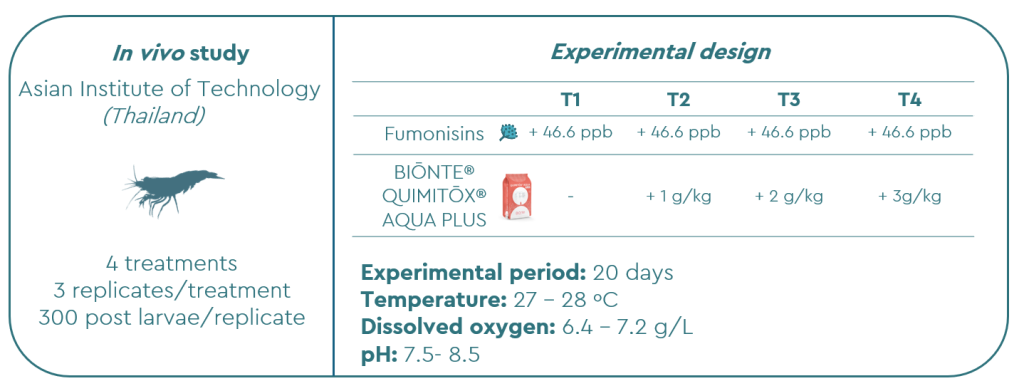
Figure 1. Experimental design: Nursery.
During the 90-day grow-out phase, biometric sampling was conducted every 30 days to monitor survival rates. Throughout this period, feed intake and growth were recorded to calculate the Feed Conversion Ratio (FCR) and the Protein Efficiency Ratio (PER). At the end of the phase, samples were collected for proximal analysis of body composition, and morphological studies of the stomach, intestine, and hepatopancreas were performed to evaluate the health status of the shrimp.
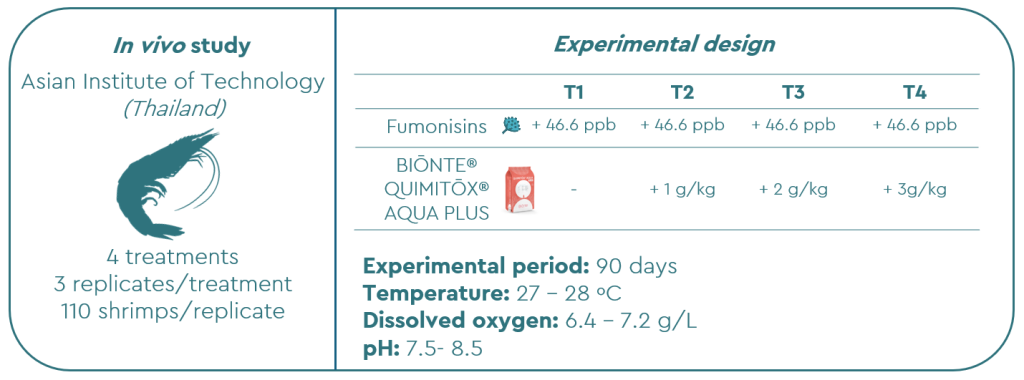
Figure 2. Experimental design: Grow-out.
Finally, a bacterial challenge was conducted using Aeromonas hydrophila, an opportunistic pathogen whose incidence is favored by stressors such as mycotoxin exposure. Following the determination of the median lethal dose (LD50) in a preliminary trial, inoculation was carried out via the immersion method across the experimental groups. During the 14-day challenge stage, mortality and external symptoms were monitored daily, and cumulative mortality was calculated to determine the protective capacity of the various treatments against an external pathogenic aggression.
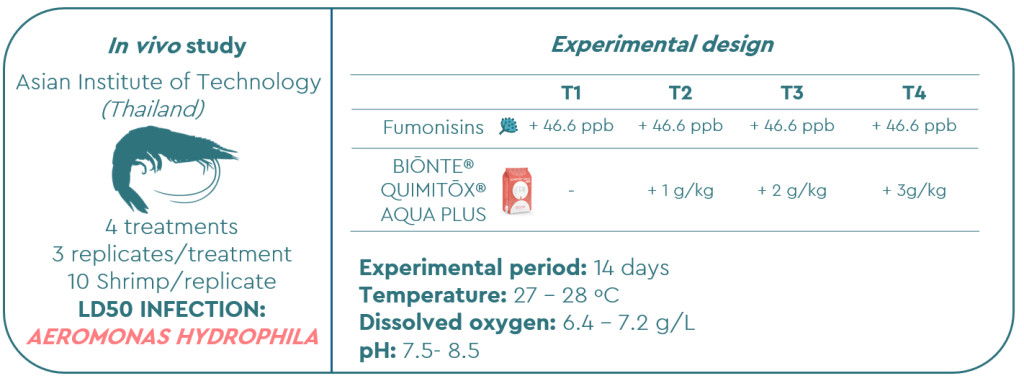
Figure 3. Experimental design: Bacterial challenge.
Results
The most relevant results obtained in the study for the various groups and stages are presented below.
For a more comprehensive and detailed review of these findings, it is recommended to consult the scientific article.
Post larvae trial: Production parameters
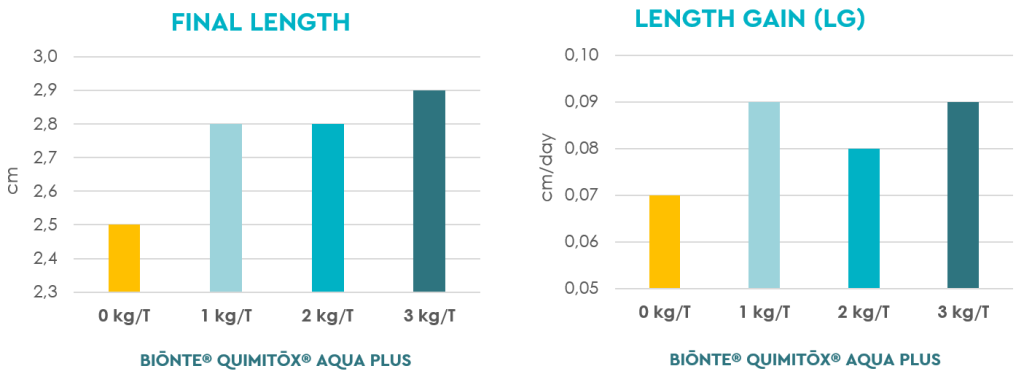
Figure 4. Nursery: Productive parameters.
During the nursery stage, supplementation with BIŌNTE® QUIMITŌX® AQUA PLUS optimized shrimp growth, achieving an increase in animal length by the end of this phase across all evaluated doses. Notably, there was a 14% improvement in length compared to the control group when using the 3 kg/T dose. This positive trend was also reflected in the daily length gain, which outperformed the control at all dosage levels and reached a 22% improvement with the 1 and 3 kg/T inclusions.
Grow-out trial: Production parameters
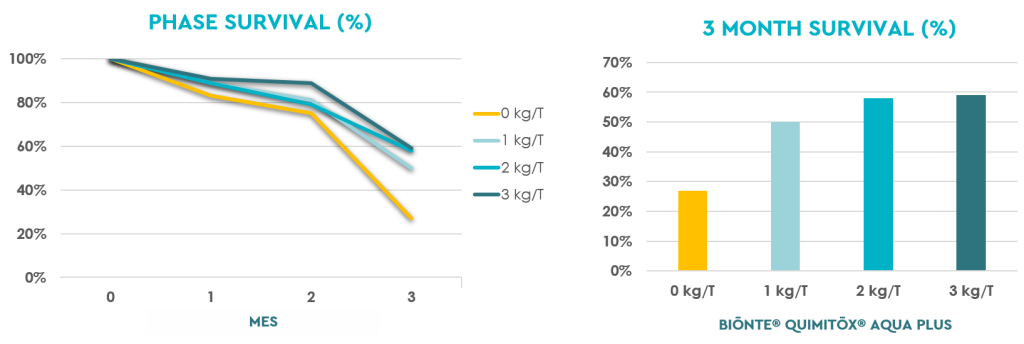
Figure 5. Grow-out: Survival.
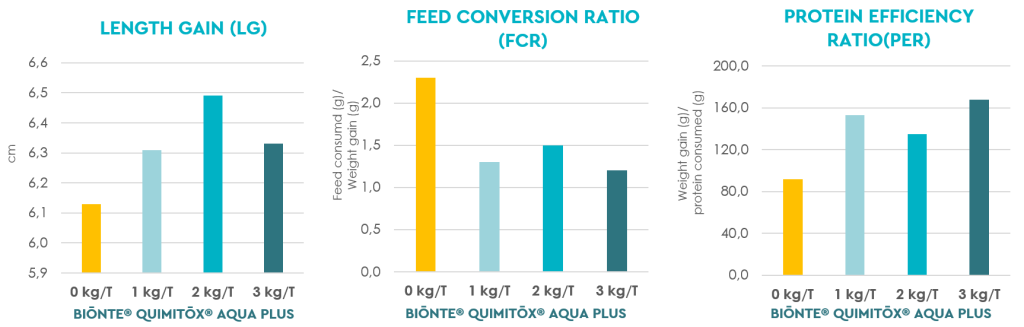
Figure 6. Grow-out: Productive and performance parameters.
During the grow-out stage, BIŌNTE® QUIMITŌX® AQUA PLUS supplementation maintained the positive trend observed during the nursery stage, optimizing productive parameters across all inclusion levels.
Notably, there was a significant increase in survival rates, which achieved a 119% improvement over the control with the 3 kg/T dose. Regarding growth, the 2 kg/T dose recorded the highest length gain (6.49 cm), outperforming the control group by 6%.
Similarly, feed efficiency reached its optimum point at the 3 kg/T dose, achieving a 48% reduction in the Feed Conversion Ratio (FCR)—dropping to a value of 1.2—and a 45% improvement in the Protein Efficiency Ratio (PER), which reached a value of 168.
Grow-out trial: Proximate composition
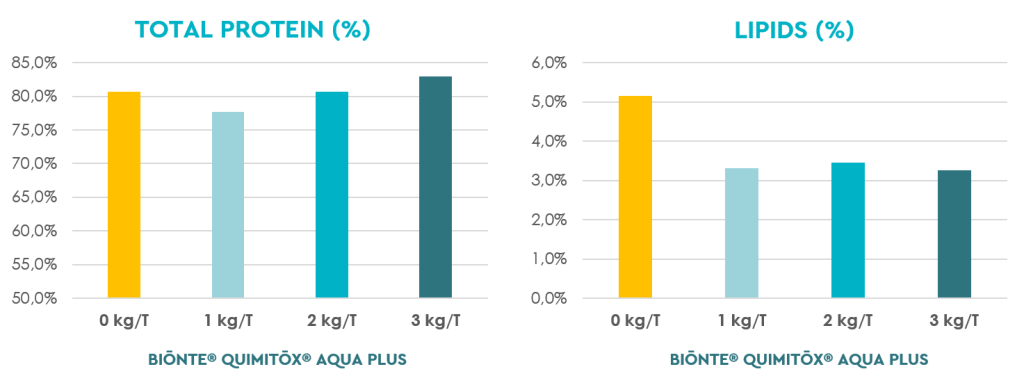
Figure 7. Grow-out: Proximate composition.
Beyond the productive parameters, the treatment’s impact on the proximate composition of the animals was evaluated, specifically regarding their total protein and lipid levels. The efficacy of BIŌNTE® QUIMITŌX® AQUA PLUS lies in its lysophospholipid content, which optimizes the bioavailability of phytogenic components and lipid metabolism. This efficient management of fats allows for the sparing of protein for growth rather than being utilized as an energy source—a phenomenon demonstrated by the study: while total protein increased by 3%, the percentage of body lipids was reduced by 37%. These results confirm that the product substantially improves the nutritional profile of white shrimp by promoting a more efficient use of nutrients.
Grow-out trial: Histopathological lesions and hepatoprotective health
Histopathological analysis revealed various damages and clinical signs of oxidative stress in the control group, located in the body as well as the intestine and the hepatopancreas. In contrast, animals supplemented with BIŌNTE® QUIMITŌX® AQUA PLUS showed a notable reduction of these effects, recovering the physiological indicators characteristic of an optimal state of health.
At the whole-body level, the treated specimens exhibited normal pigmentation and increased firmness compared to the paleness and shell weakness observed in the control group.
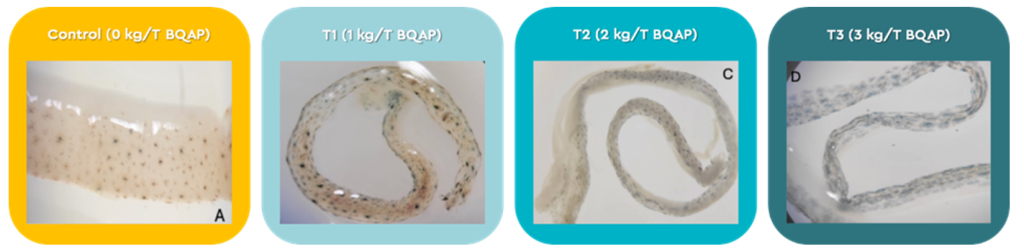
Figure 8. Grow-out: Intestine.
Similar improvements were observed in the intestine: while the control group and the minimum dose (1 kg/T) exhibited systemic inflammation and reddish coloration throughout the intestinal tract, higher doses mitigated these signs, restoring the bluish hues characteristic of a healthy gut.
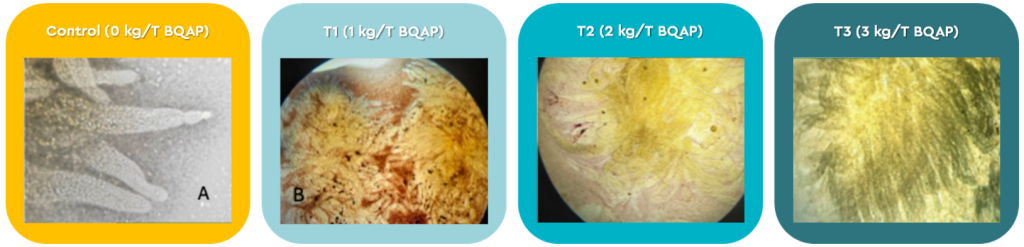
Figure 9. Grow-out: Hepatopancreas.
Likewise, the integrity of the hepatopancreas, which in the control group showed irregular surfaces and dark tones, was preserved with a smooth appearance at low and medium doses. These findings demonstrate the product’s capacity to mitigate the oxidative stress caused by fumonisins.
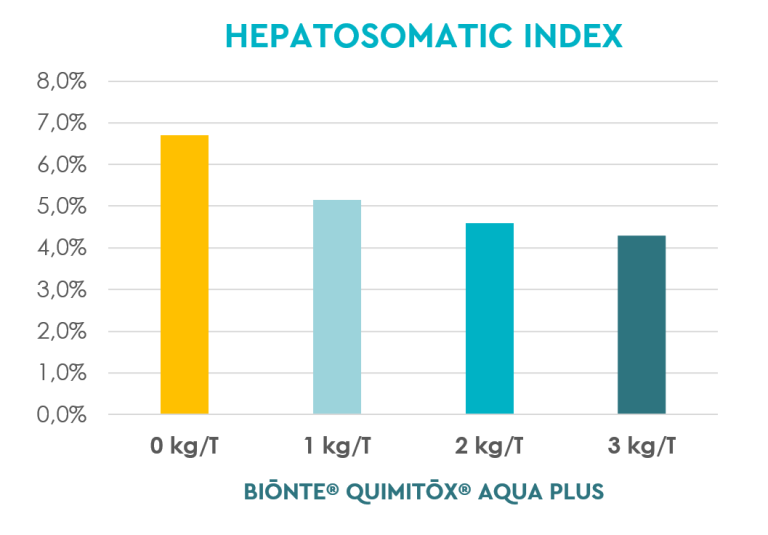
Figure 10. Grow-out: Hepatosomatic index.
This protection is further supported by the optimization of the hepatosomatic index (HSI), a key biomarker of energy reserves and systemic health. In this regard, the inclusion of BIŌNTE® QUIMITŌX® AQUA PLUS achieved a reduction of up to 56% in the high-dose group. This decrease is directly related to the mitigation of inflammation caused by fumonisins, allowing the organ to return to its physiological size and recover its critical functionality.
Supplementation with BIŌNTE® QUIMITŌX® AQUA PLUS promotes the physiological stability of white shrimp. This improvement in organic condition allows the specimen to prioritize the investment of energy into its development, thereby maximizing productive performance indices.
Bacterial challenge: Survival
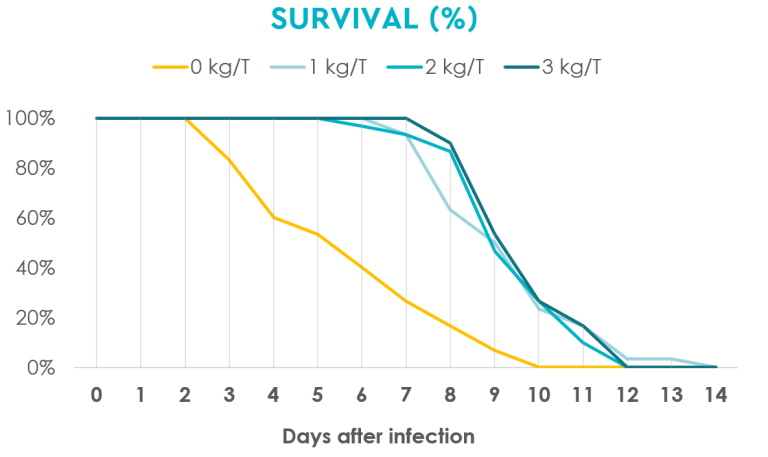
Figure 11. Bacterial challenge: Survival.
Finally, in response to the bacterial challenge with Aeromonas hydrophila, all supplemented groups showed a delay in the onset of mortality. Of particular note was the maximum dose group (3 kg/T), which maintained total survival until day 8. Conversely, the minimum dose group (1 kg/T) succeeded in postponing complete group mortality until day 14 of the study.
These results show that supplementation with BIŌNTE® QUIMITŌX® AQUA PLUS reinforced the shrimp’s immunity, as demonstrated by a significantly higher resistance to a lethal bacterial infection.
Conclusion
The presence of fumonisins in raw materials and feed constitutes a critical threat to aquaculture, severely compromising the health of white shrimp (Litopenaeus vannamei). These mycotoxins not only impair productive parameters and cause severe histopathological lesions, but they also induce a state of immunosuppression that leaves the organism vulnerable to opportunistic pathogens such as Aeromonas hydrophila. This vulnerability increases mortality rates and jeopardizes the economic viability of aquaculture operations.
In this context, the results of the in vivo study confirm that the administration of BIŌNTE® QUIMITŌX® AQUA PLUS effectively neutralizes these adverse effects. The use of this additive enabled the optimization of performance across all growth phases, acting specifically by mitigating oxidative stress and reducing tissue damage derived from chronic exposure to low levels of fumonisins. The most relevant aspect lies in its ability to bolster the immune system, strengthening the shrimp’s natural defense mechanisms and ensuring significantly higher survival rates in the face of real-world bacterial challenges.
Ultimately, the inclusion of BIŌNTE® QUIMITŌX® AQUA PLUS establishes itself as an indispensable strategy for safeguarding animal health and welfare. By restoring immunological competence and physiological integrity, the product ensures a more resilient production and enhances the final profitability of shrimp aquaculture systems.