INTRODUCTION AND OBJECTIVE
Intestinal cell layer integrity has been proven to be compromised by Fusarium-generated mycotoxins, such as deoxynivalenol (DON) and T-2 toxin, leading to an increased susceptibility of animals to pathogens and toxicants. The use of natural plant extracts is of current interest, given their favorable health properties.
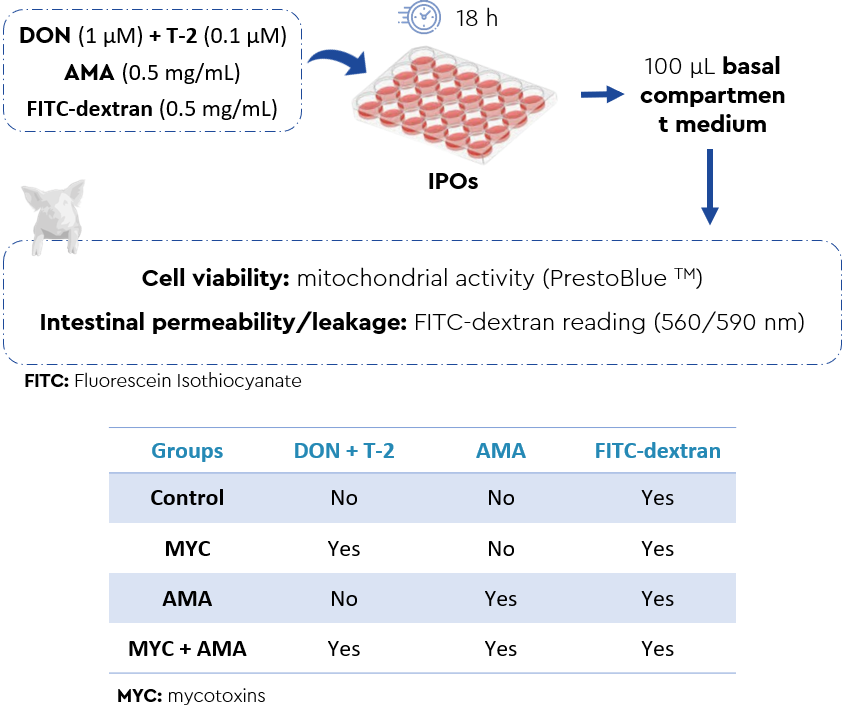
This study aims to evaluate the effectiveness of an anti-mycotoxin agent (AMA) containing turmeric (Curcuma longa) and milk thistle (Silybum marianum) extracts in mitigating the detrimental effects of DON and T-2 exposure in ileal porcine organoids (IPOs) monolayers within an ex vivo model (Kolf-Clauw et al., 2009; Pomothy et al., 2020).
MATERIALS AND METHODS
RESULTS AND DISCUSSION
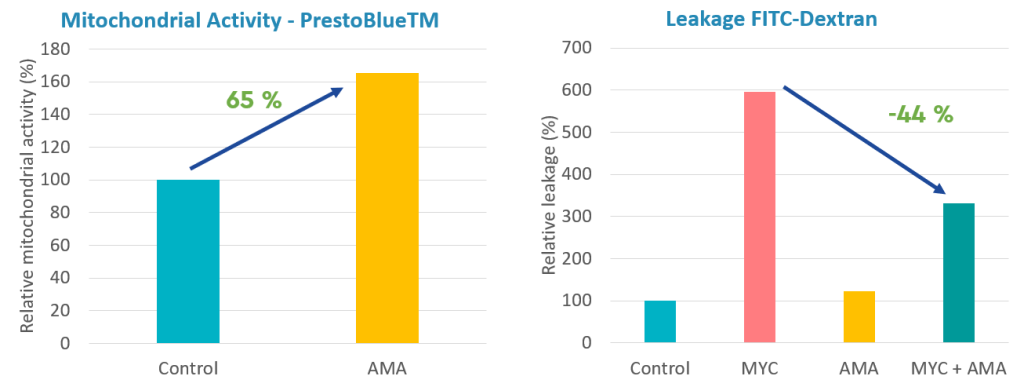
The results demonstrated that the presence of AMA resulted in enhanced mitochondrial activity values (+65%), which led to improved cell viability when compared with the control group (p ≤ 0.05). The significantly increased permeability of FITC-dextran (p<0.05) in the DON/T-2 contaminated medium was indicative of leakage. However, the permeability of the medium was found to be significantly reduced by the addition of AMA, with a marked decrease of -44% (p < 0.05).
CONCLUSION
The use of an AMA with turmeric (Curcuma longa) and milk thistle (Silybum marianum) natural extracts in its composition resulted in enhanced cellular viability and reduced intestinal permeability on mycotoxin-challenged porcine ileal organoids. The reduction of the negative effects caused by these mycotoxins could lead to increased animal growth, enhancement of the immune system and overall boosted health.
ACKNOWLEDGEMENTS AND REFERENCES
Kolf-Clauw M, Castellote J, Joly B, Bourges-Abella N, Raymond-Letron I, Pinton P, Oswald I (2009). Development of a pig jejunal explant culture for studying the gastrointestinal toxicity of the mycotoxin deoxynivalenol: Histopathological analysis. Toxicology in Vitro, 8, 1580-1584. https://doi.org/ 10.1016/j.tiv.2009.07.015
Pomothy J, Barna R, Pászti E, Babiczky Á, Szóládi Á, Jerzsele Á, Gere E (2020). Beneficial Effects of Rosmarinic Acid on IPEC-J2 Cells Exposed to the Combination of Deoxynivalenol and T-2 Toxin. Mediators of Inflammation, 2020. https://doi.org/ 10.1155/2020/8880651
This work was funded by the Centre for the Development of Technology and Innovation (CDTI) of the Spanish Ministry of Science, Innovation and Universities (Project IDI-20230474).
This work was carried out in collaboration with SCHOTHORST FEED RESEARCH.