INTRODUCTION
Maintaining animal health and performance requires protecting biological barriers against environmental and physiological stressors. These challenges can trigger excessive production of free radicals, leading to damage of essential cellular structures. In this context, natural solutions based on phytogenics derived from plant extracts have emerged as a promising alternative to support cellular resilience and overall health.
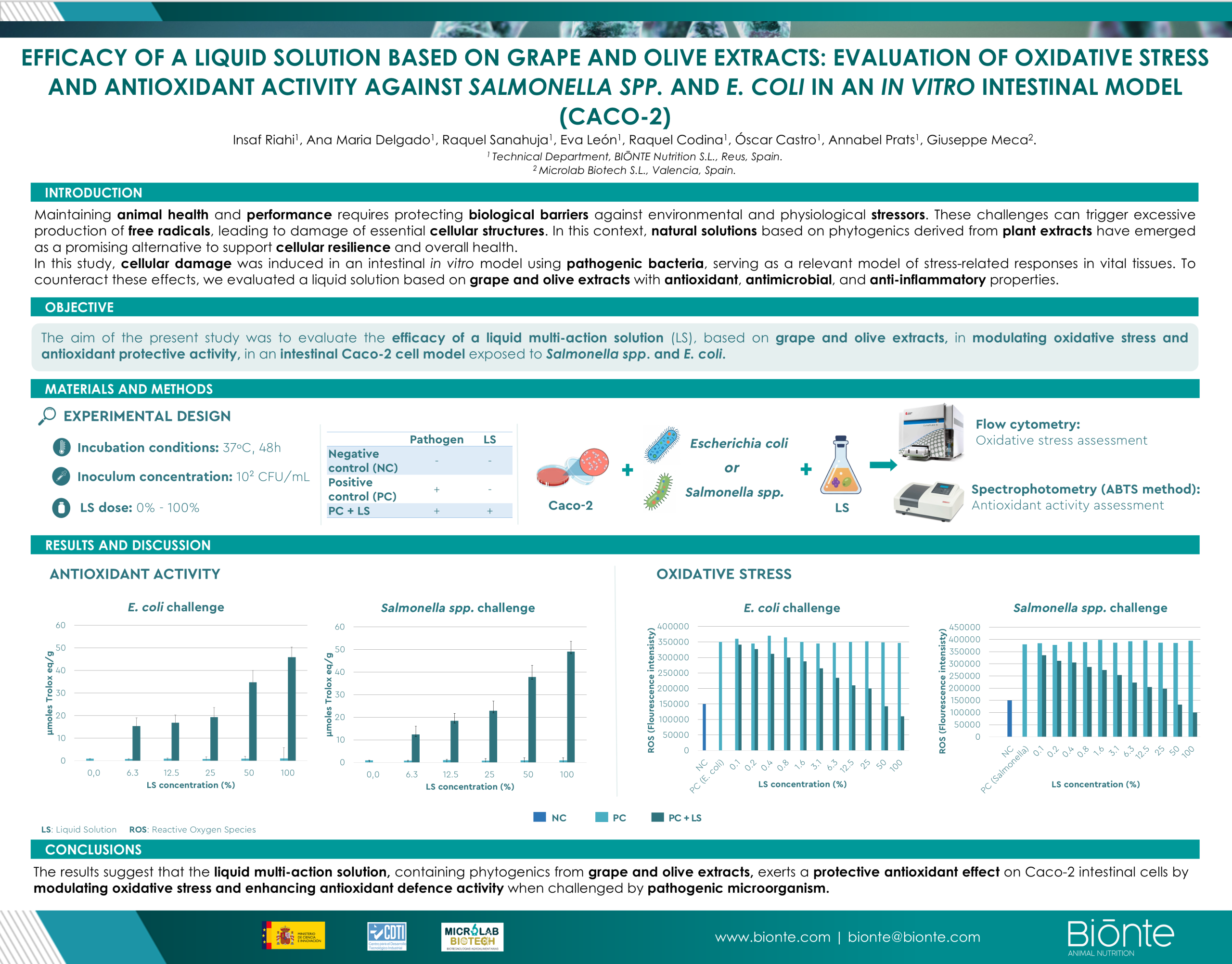
In this study, cellular damage was induced in an intestinal in vitro model using pathogenic bacteria, serving as a relevant model of stress-related responses in vital tissues. To counteract these effects, we evaluated a liquid solution based on grape and olive extracts with antioxidant, antimicrobial, and anti-inflammatory properties.
OBJECTIVE
The aim of the present study was to evaluate the efficacy of a liquid multi-action solution (LS), based on grape and olive extracts, in modulating oxidative stress and antioxidant protective activity, in an intestinal Caco-2 cell model exposed to Salmonella spp. and E. coli.
MATERIALS AND METHODS

RESULTS AND DISCUSSION
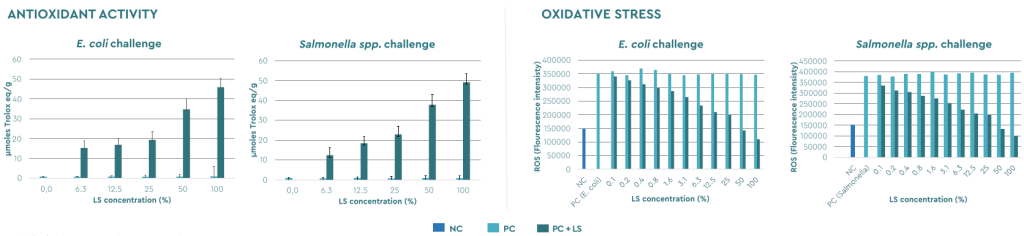
LS: Liquid Solution ROS: Reactive Oxygen Species
CONCLUSIONS
The results suggest that the liquid multi-action solution, containing phytogenics from grape and olive extracts, exerts a protective antioxidant effect on Caco-2 intestinal cells by modulating oxidative stress and enhancing antioxidant defence activity when challenged by pathogenic microorganism.