Introduction
In animal production, there are various sources of stress — environmental, climatic, management-related, social, sanitary, or nutritional, including the presence of mycotoxins — that not only alters animal behaviour but also trigger systemic responses that profoundly affect animal health and performance (Helmut, 2015; Mavrommatis et al., 2021). One of the primary metabolic consequences of these stressors is the biological imbalance between the production of reactive oxygen species (ROS) and the animal’s endogenous antioxidant capacity. This oxidative stress compromises immunity, welfare, and, ultimately, farm profitability, as it marks the beginning of functional degradation (Oke et al., 2024). Oxidative stress leads to:
- Lipid peroxidation: Free radicals attack cell membranes, particularly affecting the enterocytes of the gastrointestinal tract.
- Intestinal barrier alteration: Oxidative damage weakens tight junctions, causing leaky gut syndrome and facilitating the entry of other pathogens and toxins into the bloodstream.
- Organ dysfunction: Key organs such as the liver and kidneys suffer inflammatory lesions that waste metabolic energy away from production (meat, eggs, or milk) and toward cellular repair processes.
The impact of oxidative stress is directly reflected in production parameters (An et al., 2024; Chen et al., 2021; Longobardi et al., 2022):
- Drop in Feed Conversion Ratio: Lower nutrient absorption due to damage to the intestinal epithelium.
- Immunosuppression: The immune system weakens, increasing vulnerability to health challenges and reducing the efficacy of vaccination programs.
- Mortality: Chronic lesions in vital organs lead to a loss of longevity and an increase in mortality rates.
To address this challenge, BIŌNTE® QUIMITŌX® LIVŌX® stands as an indispensable tool.
BIŌNTE® QUIMITŌX® LIVŌX®: A liquid solution that relieves oxidative stress
BIŌNTE® QUIMITŌX® LIVŌX® is a liquid formulation designed to protect animals’ biological barriers against physiological and environmental stressors. Thanks to its formulation based on multiple bioactive compounds derived from grape and olive extracts, it possesses antioxidant, anti-inflammatory and antimicrobial properties.
Regarding its antioxidant properties, this formulation not only helps to neutralize free radicals but also significantly stimulates the cells’ natural antioxidant response, protecting both intestinal and hepatic integrity.
To validate the efficacy of this liquid solution, an in vitro assay of its antioxidant capacity was conducted in collaboration with Microlab Biotech (University of Valencia). The Caco-2 cell model, an international standard for the study of intestinal health and permeability, was used. The experimental design focused on evaluating how the product modulates cellular stress when the intestine is challenged by bacterial pathogens (Escherichia coli and Salmonella spp.). The experiments were carried out at a temperature of 37ºC during a 48-hour incubation period.
Three different groups where tested (Figure 1):
- Negative control (NC): Caco-2 cell culture without stressors or product.
- Positive control (PC): Caco-2 cell culture inoculated with 102 CFU/mL of coli or Salmonella spp. (stress factor).
- BIŌNTE® QUIMITŌX® LIVŌX® Group (LS): Caco-2 cell culture inoculated with 102 CFU/mL of coli or Salmonella spp. (stress factor), to which different concentrations of BIŌNTE® QUIMITŌX® LIVŌX® (0-100%) were added.
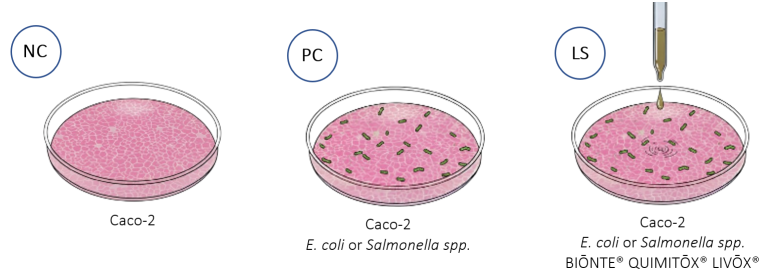
Figure 1. Three tested groups. NC: negative control, PC: positive control, LS: BIŌNTE® QUIMITŌX® LIVŌX® group.
For each group, oxidative stress (flow cytometry) and antioxidant capacity (spectrophotometry, 2,2′-azino-bis(3-ethylbenzothiazoline-6-sulfonic acid) (ABTS) method) was evaluated. The results obtained are shown in Figures 2, 3, 4, and 5.
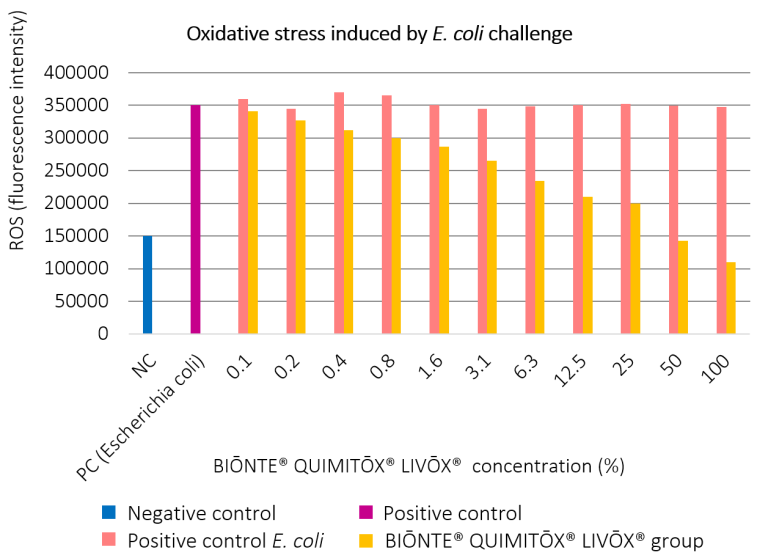
Figure 2. Results of the evaluation of oxidative stress induced by E. coli at different concentrations (%) of BIŌNTE® QUIMITŌX® LIVŌX®.
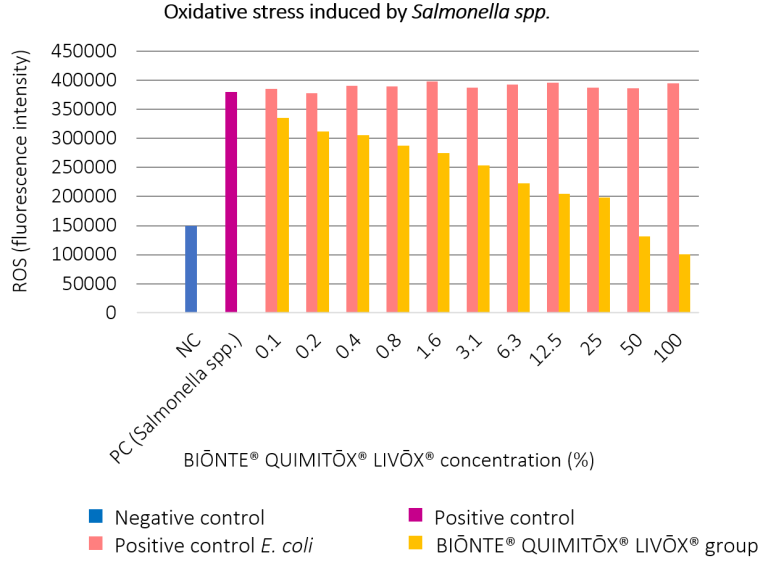
Figura 3. Results of the evaluation of oxidative stress induced by Salmonella spp at different concentrations (%) of BIŌNTE® QUIMITŌX® LIVŌX®.
Figures 2 and 3 illustrate how the applied stressors, E. coli and Salmonella spp., induce a marked rise in ROS levels, reaching fluorescence intensity peaks close to 400,000 units. These levels of severe oxidative stress can compromise organic integrity in animals, seriously endangering their health. On the other hand, it is observed that the inclusion of BIŌNTE® QUIMITŌX® LIVŌX® significantly reduces ROS levels, reaching values close to or even lower than those of the Negative Control. It should be noted that even at very low concentrations (0.1%), the product leads to a decrease in oxidative stress levels. Furthermore, the results show that the product exhibits a dose-dependent effect, with a greater reduction in ROS as the dose increases.
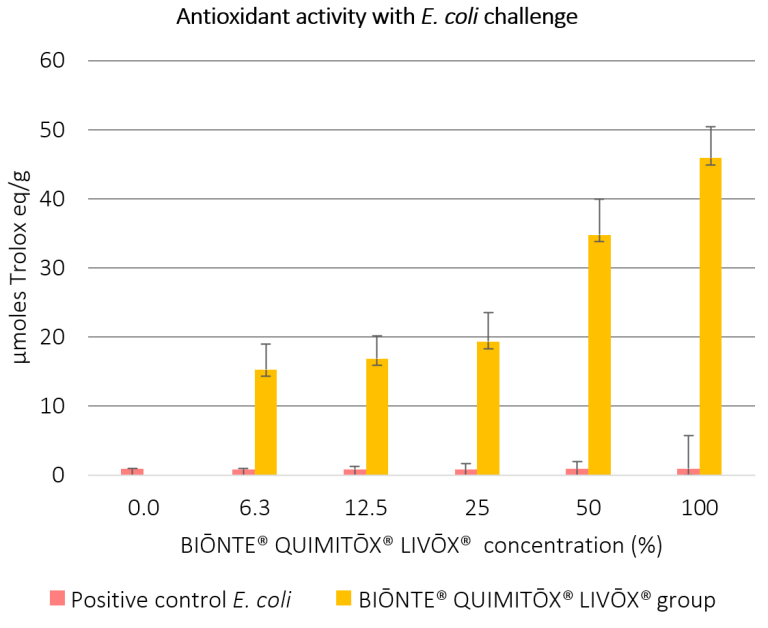
Figura 4. Results of the antioxidant activity at different concentrations (%) of BIŌNTE® QUIMITŌX® LIVŌX® in cells exposed to E. coli.
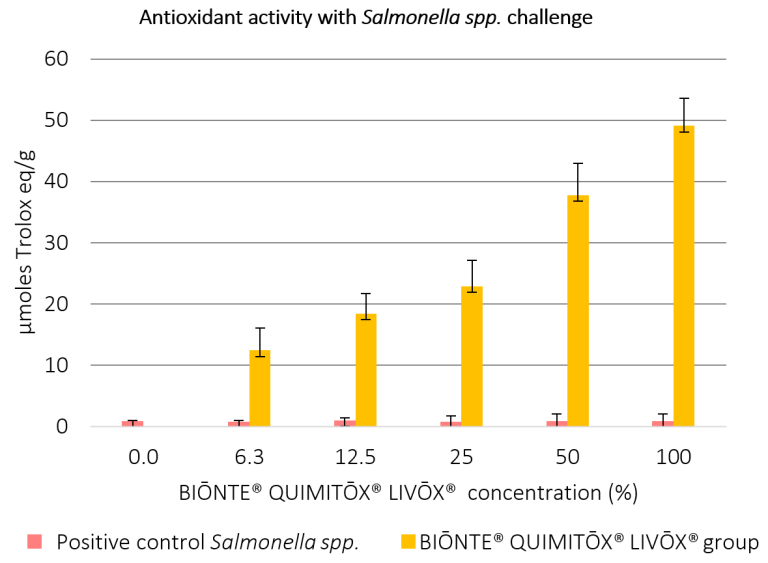
Figura 5. Results of the antioxidant activity at different concentrations (%) of BIŌNTE® QUIMITŌX® LIVŌX® in cells exposed to Salmonella spp.
Figures 4 and 5 illustrate that the Positive Control shows almost zero antioxidant activity when facing the bacterial challenge. This confirms that, during an infection, the cell’s natural mechanisms are insufficient to mitigate oxidative damage. Conversely, the inclusion of BIŌNTE® QUIMITŌX® LIVŌX® considerably increases the cells’ antioxidant activity, reaching values of up to 50 μmoles Trolox eq/g. In this way, it is observed how the product contributes, once again in a dose-dependent manner, to the neutralization of free radicals, offering protection against oxidative stress.
Conclusions
Controlling oxidative stress is essential for improving animal health. The excessive production of free radicals can compromise product quality and reduce animal performance, triggering significant economic losses and jeopardizing the viability of livestock operations.
This study confirms that BIŌNTE® QUIMITŌX® LIVŌX®, thanks to its composition rich in bioactive compounds derived from grape and olive extracts, reduces oxidative stress and stimulates the antioxidant capacity of cells, helping to restore the biological balance disrupted by pathogenic microorganisms (E. coli and Salmonella spp.).
In this way, BIŌNTE® QUIMITŌX® LIVŌX® positions itself as an efficient alternative for controlling the stressors that disrupt animal health, contributing to cellular integrity and, consequently, to organic functionality and general health.