Introduction
As aquaculture feeds incorporate more plant-based protein sources, the threat of mycotoxin exposure increases in parallel, with a corresponding negative impact on animal health and the economic viability of the sector. Although the incidence of these metabolites is a growing concern, their specific consequences in aquaculture remain a relatively unexplored field.
Among them, aflatoxins constitute one of the most abundant and dangerous groups of mycotoxins, having been detected in raw materials and feeds as well as in water samples (Wang et al., 2023). These mycotoxins are produced by fungal species of the genus Aspergillus, mainly A. flavus and A. parasiticus, which synthesize aflatoxin B1, B2, G1, G2, M1, and M2, among others (Cáceres et al., 2020).
Aflatoxin B1 (AFB1), specifically, is classified as a Group 1 carcinogen by the World Health Organization (WHO) and is subject to international regulation (Ruan et al., 2023). However, the frequent omission of other aflatoxins in routine analyses can represent an emerging public health issue, as it underestimates both their individual toxicity and their combined risk (Wang et al., 2023).
Aflatoxins negatively affect both productive performance and health in aquaculture species. In Pacific white shrimp (Litopenaeus vannamei), reductions and alterations in hepatopancreatic function, oxidative status, and the activity of the immune and digestive systems have been reported, thereby compromising animal growth and survival (Fang et al., 2020; Su et al., 2022).
| EFFECTS OF AFB1 ON PACIFIC WHITE SHRIMP | ||||
|---|---|---|---|---|
| Productive parameters | Hepatopancreatic activity and health | Immune system | Antioxidant capacity and oxidative stress | Hematology biomarkers |
| ↓ Final weight ↓ Weight gain ↓ Specific growth rate | ↓ Amylase ↓ Lipase ↑ Alanine aminotransferase (ALT) ↑ Aspartate aminotransferase (AST) ↑ Hepatopancreatic necrosis ↑ Hepatopancreatic inflammation | ↓ Lysozyme ↓ Respiratory burst activity ↓ Phagocytosis | ↑ Malondialdehyde (MDA) ↓ Superoxide dismutase (SOD) ↓ Catalase (CAT) ↓ Reduced glutathione (GSH) | ↓ Total hemocyte count (TCH) ↓ Granular cells (GC) ↓ Semi-Granular cells (SGC) ↓ Hyaline cells (HC) |
BIŌNTE® QUIMITŌX® AQUA PLUS: An efficient strategy against the effects of AFB1 in Pacific white shrimp
BIŌNTE® QUIMITŌX® AQUA PLUS is a complete solution specifically designed for aquaculture, offering comprehensive protection against mycotoxins through its multiple modes of action. Beyond its extraordinary adsorption capacity, driven by selected bentonites and sepiolite, which reduce the bioavailability of toxins in the digestive tract, this product integrates an advanced bioprotection strategy based on key phytogenic extracts, namely curcumin and silymarin. This powerful formulation is completed by the post-biotic effect derived from the inclusion of yeast cell wall and hydrolyzed yeast, thereby reinforcing health and productive performance in aquaculture operations.
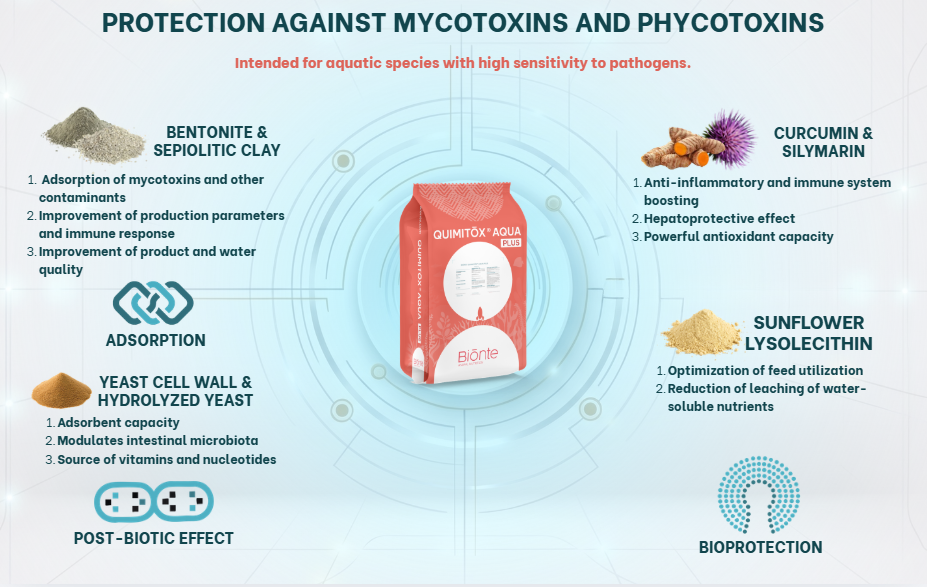
To evaluate the efficacy of BIŌNTE® QUIMITŌX® AQUA PLUS in Pacific white shrimp, the following in vivo study was carried out in collaboration with Mansoura University (Egypt).
Materials and methods: Experimental design
The objective of the present study was to demonstrate the in vivo efficacy of BIŌNTE® QUIMITŌX® AQUA PLUS in mitigating the adverse effects of an AFB1-contaminated diet in Pacific white shrimp.
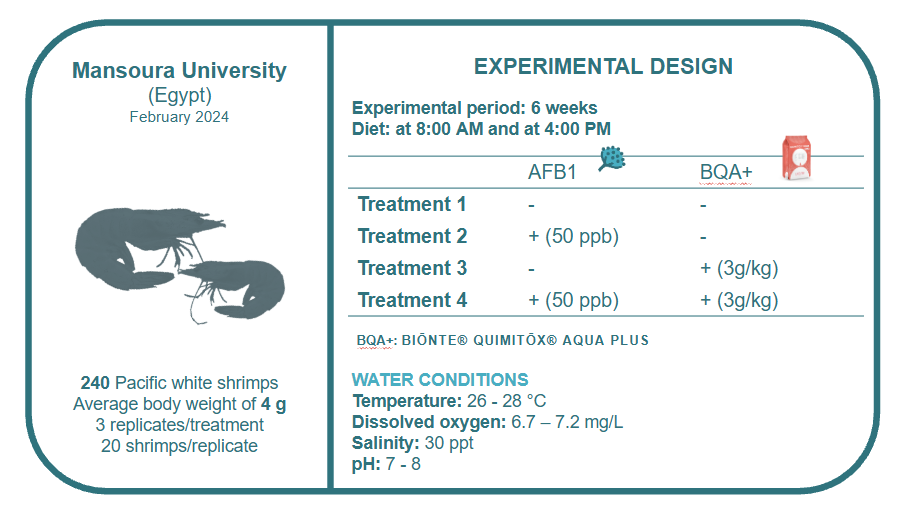
Figure 1. Experimental design.
The experimental design was divided into four experimental groups: a control group fed a mycotoxin-free diet (T1); a second group that received a diet contaminated with critical levels of AFB1 (T2); a third group not exposed to mycotoxins and given a 3 g/kg dose of BIŌNTE® QUIMITŌX® AQUA PLUS (T3); and a final group exposed to a diet contaminated with critical levels and receiving the same dose of BIŌNTE® QUIMITŌX® AQUA PLUS (T4).
During the trial, culture conditions like water temperature, dissolved oxygen, and pH were monitored daily. At the end of the experimental period, all animals across the different treatments were weighed to evaluate growth performance parameters. In addition, six shrimp per group were sampled to collect hemolymph for hematological, biochemical, and immunological analyses. Portions of the hepatopancreas and intestine were collected for studies on oxidative stress, gene expression, and histopathology. Finally, muscle samples were analyzed to determine the carry-over of AFB1 residues.
Results
Below are the main results obtained in the study for the different trial groups; however, to facilitate reading, only those corresponding to groups T1, T2, and T4 are included. For a more comprehensive and detailed review of these findings, please refer to the scientific article published on this study in the peer-reviewed journal Aquaculture.
Exposing shrimp to the AFB1-contaminated diet (50 ppb) caused a drastic reduction in their productive performance, as reflected in the decrease in final weight values and specific growth rate. The dietary supplementation of BIŌNTE® QUIMITŌX® AQUA PLUS (3 g/kg) significantly improved these parameters (Figure 2).
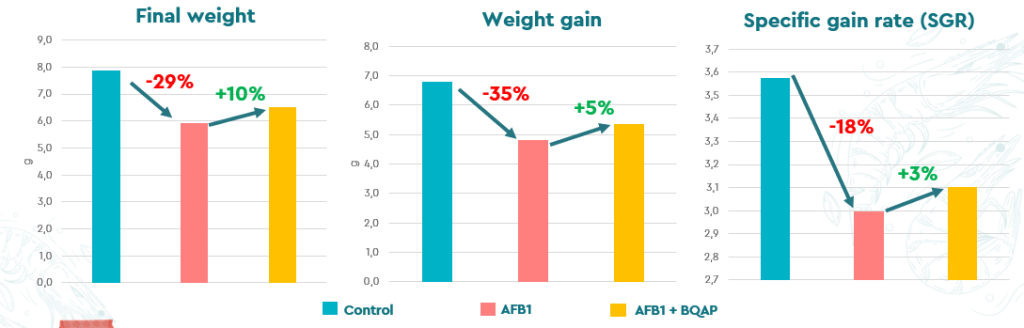
Figure 2. Production parameters.
The presence of AFB1 caused marked hematological alterations in the shrimp, characterized by anemia with a significant drop in the count of total hemocytes, granular cells, semi-granular cells, and hyaline cells. These changes reflect a severe systemic impairment caused by AFB1 on hemolymph physiology, compromising oxygen transport capacity and the immune response.
The inclusion of BIŌNTE® QUIMITŌX® AQUA PLUS effectively counteracted these effects, reaching closer values to those of the control group (Figure 2). This confirms the protective role of the product against AFB1-induced hematological damage.
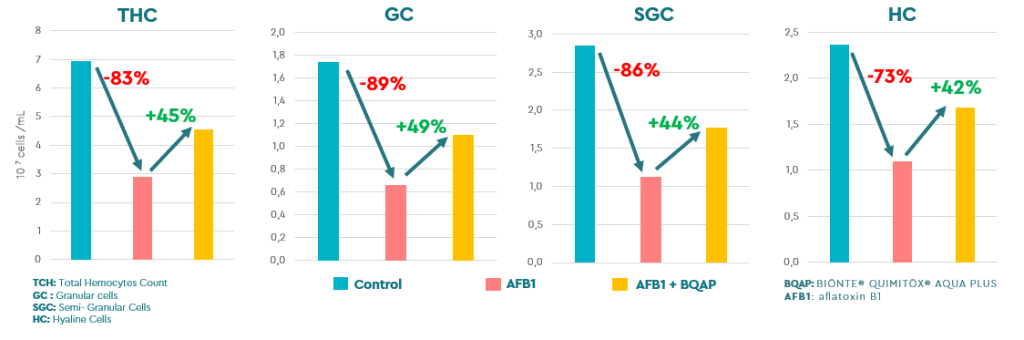
Figure 3. Hematology biomarkers.
Regarding the immune system, exposure to AFB1 negatively affected the animals’ innate immunity, causing a significant decrease in respiratory burst activity and alterations in lysozyme activity and phagocytosis. These three mechanisms integrate chemical, enzymatic, and cellular pathways to destroy, degrade, and eliminate pathogens; therefore, monitoring them alongside hemolymph biomarkers allows for evaluating the animal’s overall defensive capacity.
The administration of BIŌNTE® QUIMITŌX® AQUA PLUS normalized these immunological parameters, restoring the functionality of the innate immune system. This immunomodulatory effect contributes to improving animal resistance to stress and health challenges associated with mycotoxin contamination. This is of significant interest in shrimp farming, as shrimp lack adaptive immunological memory and depend exclusively on these non-specific mechanisms to survive infectious outbreaks.
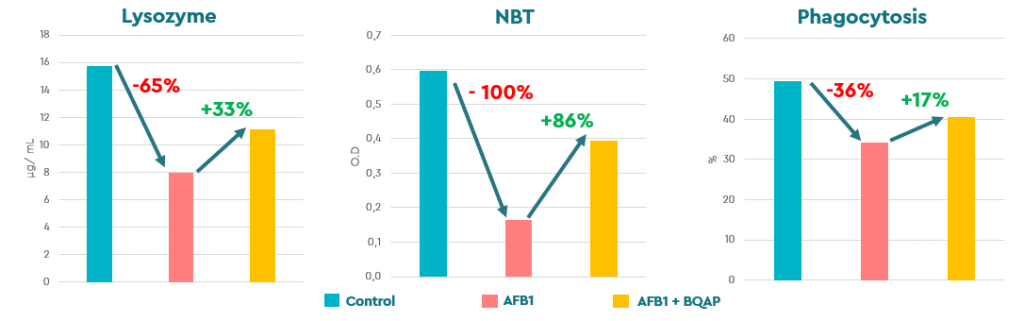
Figure 4. Immune response biomarkers.
Likewise, the presence of AFB1 in the diet generated a marked state of oxidative stress, as evidenced by a significant increase in lipid peroxidation markers, malondialdehyde (MDA), and a reduction in key antioxidant enzymes (SOD, CAT, and GSH). This oxidative imbalance is directly implicated in the cellular and tissue damage observed in the exposed animals.
The addition of BIŌNTE® QUIMITŌX® AQUA PLUS markedly decreased MDA levels and enhanced antioxidant enzymatic activity, restoring the redox state of the hepatopancreas.
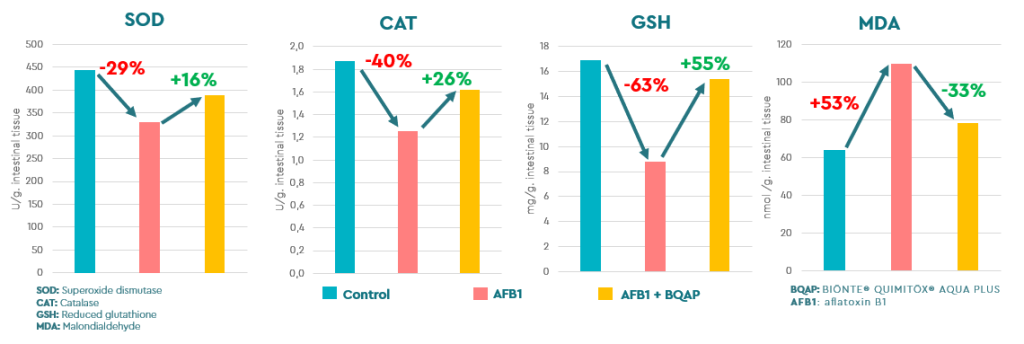
Figure 5. Oxidative stress biomarkers.
Due to AFB1’s toxicity and the associated oxidative stress, animals fed the contaminated diet showed higher activity of the hepatopancreatic enzymes alanine aminotransferase (ALT) and aspartate aminotransferase (AST). On the other hand, the function of the hepatopancreas digestive enzymes (amylase and lipase) was significantly reduced.
Dietary supplementation with BIŌNTE® QUIMITŌX® AQUA PLUS in the contaminated diet successfully restored physiological levels, thereby demonstrating adequate hepatopancreatic status.
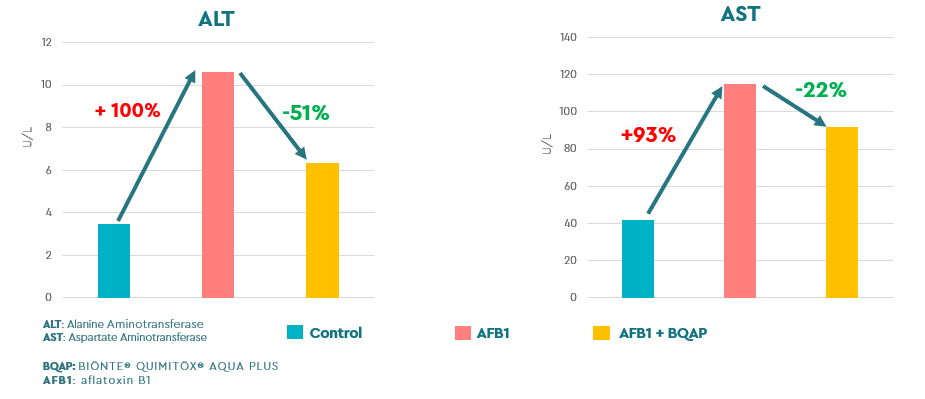
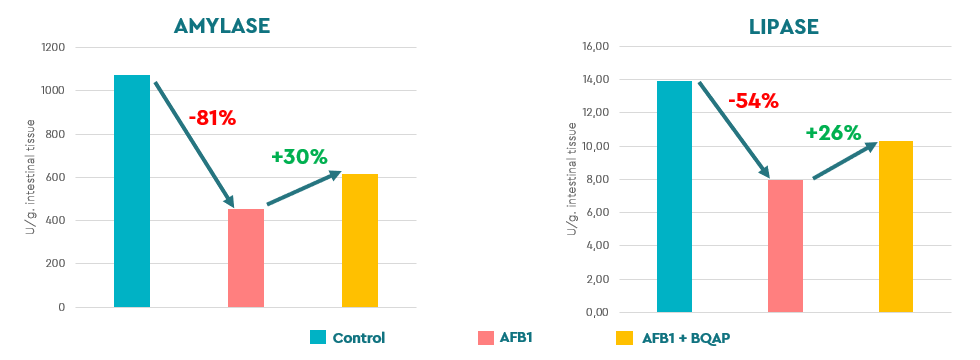
Figure 6. Hepatopancreatic enzymes.
Regarding the bioaccumulation of AFB1 in muscle, this represents one of the main risks associated with animal exposure to mycotoxins, both for animal health and due to the food safety concerns it creates. In the present study, in those animals belonging to the group exposed solely to AFB1, AFB1 concentrations in muscle of 11,840 ng/kg at 2 weeks and 80,590 ng/kg at 6 weeks were detected.
These values significantly exceed the most stringent reference limits for high-risk foods under Regulation (EU) 2023/915. This demonstrates that prolonged exposure in shrimp represents a critical impact on the food chain and a risk to public health.
Supplementation with BIŌNTE® QUIMITŌX® AQUA PLUS drastically reduced these levels, reaching an 88.18% decrease at 2 weeks and 99.95% at 6 weeks, lowering AFB1 concentrations to safe values near the limit of detection. These results demonstrate the formulation’s high capacity to reduce mycotoxin accumulation in edible tissues.
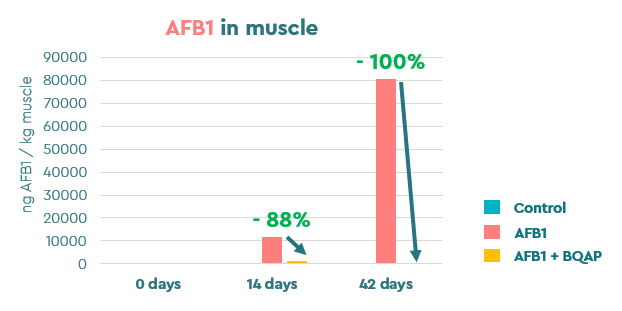
Figure 7.Accumulation of AFB1 in muscle tissue.
Finally, histopathological analysis revealed that AFB1 caused severe lesions in both the hepatopancreas and the intestine, including hepatopancreatic inflammation and necrosis, as well as intestinal structural alterations that compromise nutrient absorption.
In shrimp that received BIŌNTE® QUIMITŌX® AQUA PLUS, these lesions were markedly reduced, with only mild alterations observed alongside a clear preservation of structural integrity. This protective effect confirms the product’s ability to mitigate damage induced by AFB1 and promote the maintenance of target organ integrity.
Among the damages caused to the hepatopancreas by AFB1, the presence of necrotic hepatocytes and fibrosis was particularly prominent. These lesions were attenuated in the group exposed to the mycotoxin that received BIŌNTE® QUIMITŌX® AQUA PLUS.
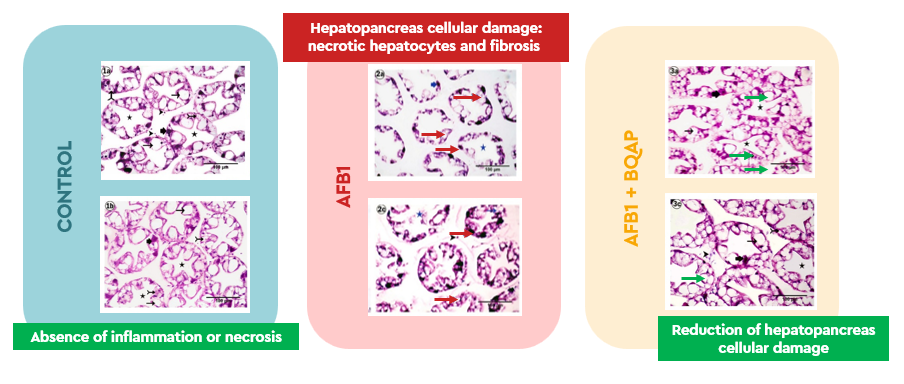
Figure 8. Histopathology of hepatopancreas.
Regarding the intestine, the main abnormalities observed consisted of a reduction in tissue thickness and integrity, both of which showed improvement in the group that received both the mycotoxin and BIŌNTE® QUIMITŌX® AQUA PLUS.
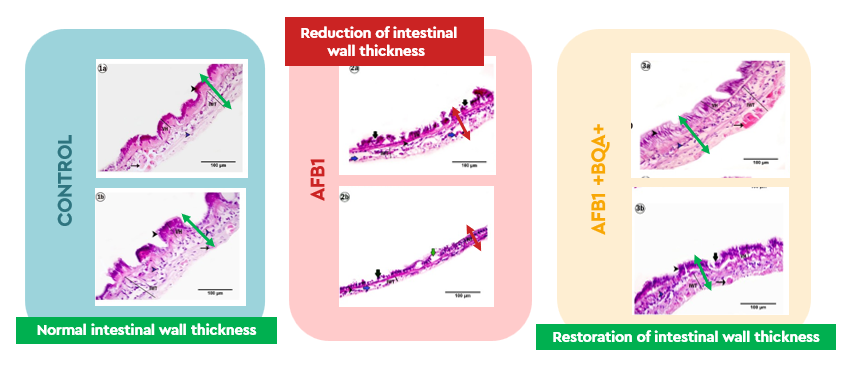
Figure 9. Histopathology of intestine
Conclusion
Due to their high prevalence in raw materials and finished feeds, aflatoxins represent a significant health threat in aquaculture, especially in immunologically sensitive species such as the Pacific white shrimp. Their presence impairs production parameters, causes organ damage, and compromises the immune system, severely impacting overall performance.
The results of this in vivo study demonstrated that the administration of BIŌNTE® QUIMITŌX® AQUA PLUS to Pacific white shrimp individuals reduced AFB1 bioaccumulation, optimized performance, and improved production profitability. At the same time, it counteracted mycotoxin-induced damage in the hepatopancreas, reduced oxidative stress and hematological disorders, thereby favoring the recovery of the animals’ immune system.
The inclusion of BIŌNTE® QUIMITŌX® AQUA PLUS improves animal health and welfare, thereby contributing to the profitability of shrimp aquaculture farms.