Introduction
Mycotoxins are secondary metabolites produced by fungi such as Aspergillus spp., Penicillium spp., and Fusarium spp., among others. A single fungal strain can synthesize multiple mycotoxins, and conversely, a single mycotoxin can be produced by several distinct species.
These metabolites are widely recognized for their severe toxicity to human and animal health, with several, such as aflatoxin B1 (AFB1), fumonisins (FBs), or ochratoxin A (OTA), classified as carcinogens. Consequently, global regulatory bodies enforce strict contamination limits for commercial food items. Additionally, binding agents are routinely blended into livestock feed to mitigate their adverse toxic effects (Accinelli et al., 2008).
Despite these food-safety safeguards, the environmental behavior of mycotoxins in agricultural soils remains unmanaged. Soil serves as a biological reservoir for mycotoxigenic fungi and a chemical sink for these persistent organic pollutants, ultimately threatening adjacent aquatic ecosystems through subsurface runoff and leaching.
Modified mycotoxins originate through processes of chemical biotransformation or enzymatic conjugation mediated by host vegetation, competing fungal species, or soil microbiota. These structural modifications alter the molecular weight and polarity of the parent compound through the addition of hydrophilic residues, primarily via conjugation with glucose, sulfate groups, or amino acids.
This alteration in the analytical profile generates conjugated derivatives that evade detection, leading to an underrepresentation of the total toxicity. Despite this apparent inactivation, the stability of the conjugated compound within the soil matrix perpetuates the environmental hazard and latent ecotoxicity (Bekci et al., 2011).
Entry routes of mycotoxins into soil ecosystems
Fungi generally synthesize mycotoxins while infecting living host plant tissues rather than when existing saprophytically in bare soil. Consequently, mycotoxins enter the terrestrial compartment via three direct and indirect agricultural pathways (Accinelli et al., 2008):
- Crop residues: Quantitatively the primary input pathway. Wheat or corn residues infected by Fusarium spp. are incorporated into the topsoil, gradually releasing accumulated toxins as the biomass decomposes.
- Foliar wash-off: Heavy rainfall events transport mycotoxins synthesized in above-ground plant organs directly onto the soil surface.
- Organic soil fertilizers: Manure and slurry derived from livestock fed contaminated grain contain unmetabolized mycotoxins or active metabolites. Spreading these organic fertilizers introduces mycotoxins into cropland.
Regarding modified mycotoxins, their entry pathway into the soil matrix is identical to that of their parent compounds; however, this chemical modification is typically reversible. Soil microbial communities (bacteria and fungi) synthesize specific enzymes capable of catalyzing the hydrolysis of these molecular bonds, thereby releasing the original free mycotoxin back into the environment.
Adsorption, dispersion, and leaching
Mycotoxin retention is primarily governed by soil texture. Clays (especially montmorillonite and smectites) act as the primary inorganic sorbents (Mertz et al., 1981). Hydrophobic mycotoxins exhibit high organic carbon partition coefficients and may be retained in organic-matter-rich soils (Angle, 1986). In contrast, adsorption is weak in sandy soils, leaving unbound toxins mobile in the soil pore water.
Despite continuous field detection, most mycotoxins exhibit relatively short dissipation half-lives (DT50), ranging from a few days to a few weeks. Attenuation occurs through three primary mechanisms (Sabater-Vila et al., 2007):
- Microbial Biotransformation: Soil microbiota represent the predominant attenuation mechanism (Figure 1). Bacterial strains from the genera Devosia, Pseudomonas, Rhodococcus, and Nocardioides express deepoxidase and esterase enzymes capable of transforming the toxic epoxide ring of deoxynivalenol (DON) into less harmful metabolites such as 3-epi-DON or deepoxy-DON. Furthermore, dissipation rates for zearalenone (ZEN) and OTA are more rapid in active rhizosphere soils compared with those in bare soils (Sabater-Vila et al., 2007).
- Effect of Texture on Degradation: High clay content can paradoxically reduce the biodegradation rate by slowly desorbing the toxin into the aqueous phase where it is accessible to bacteria. Consequently, CO₂ mineralization rates are faster in low-fertility sandy soils compared to complex clay soils (Sabater-Vila et al., 2007).
- Risk of “Bound Residues”: Part of the loss of analytical signal in degradation studies does not correspond to true mineralization, but rather to the formation of irreversible covalent bonds or physical entrapment within the humified matrix, which could potentially be re-released under changing environmental conditions (e.g., pH shifts or microbial activity changes) (Sabater-Vila et al., 2007).
While laboratory models suggest that clay retention limits deep vertical transport, field observations in agricultural watersheds demonstrate periodic transfer to surface and groundwater systems (Hartmann et al., 2008).
The chemical and physical process by which a liquid dissolves and extracts soluble substances from a solid material (leaching) is negligible in a homogeneous clay matrix (Sabater-Vila et al., 2007). This estimate, however, assumes a homogeneous matrix at adsorption equilibrium, a condition rarely met under real field conditions. Bypassing this equilibrium, transport becomes significant through the following pathways (Figure 1):
- Preferential flow/macropores: Desiccation cracks, earthworm burrows, and macropores transport dissolved or colloid-bound toxins without allowing sufficient time for adsorption equilibrium (Muñoz et al., 2015).
- Torrential rainfall events: Heavy rainfall occurring immediately after stubble deposition leach ZEN and DON through subsurface tile drains (Hartmann et al., 2008).
ZEN concentrations in puddles (250 ng/L), drainage outlets (35 ng/L), and rivers (43.7 ng/L) align with the biological activity ranges of synthetic estrogens. These levels are sufficient to trigger vitellogenin synthesis, driving the feminization of male fish and inducing reproductive disruption in aquatic invertebrates (Williams et al., 2003).
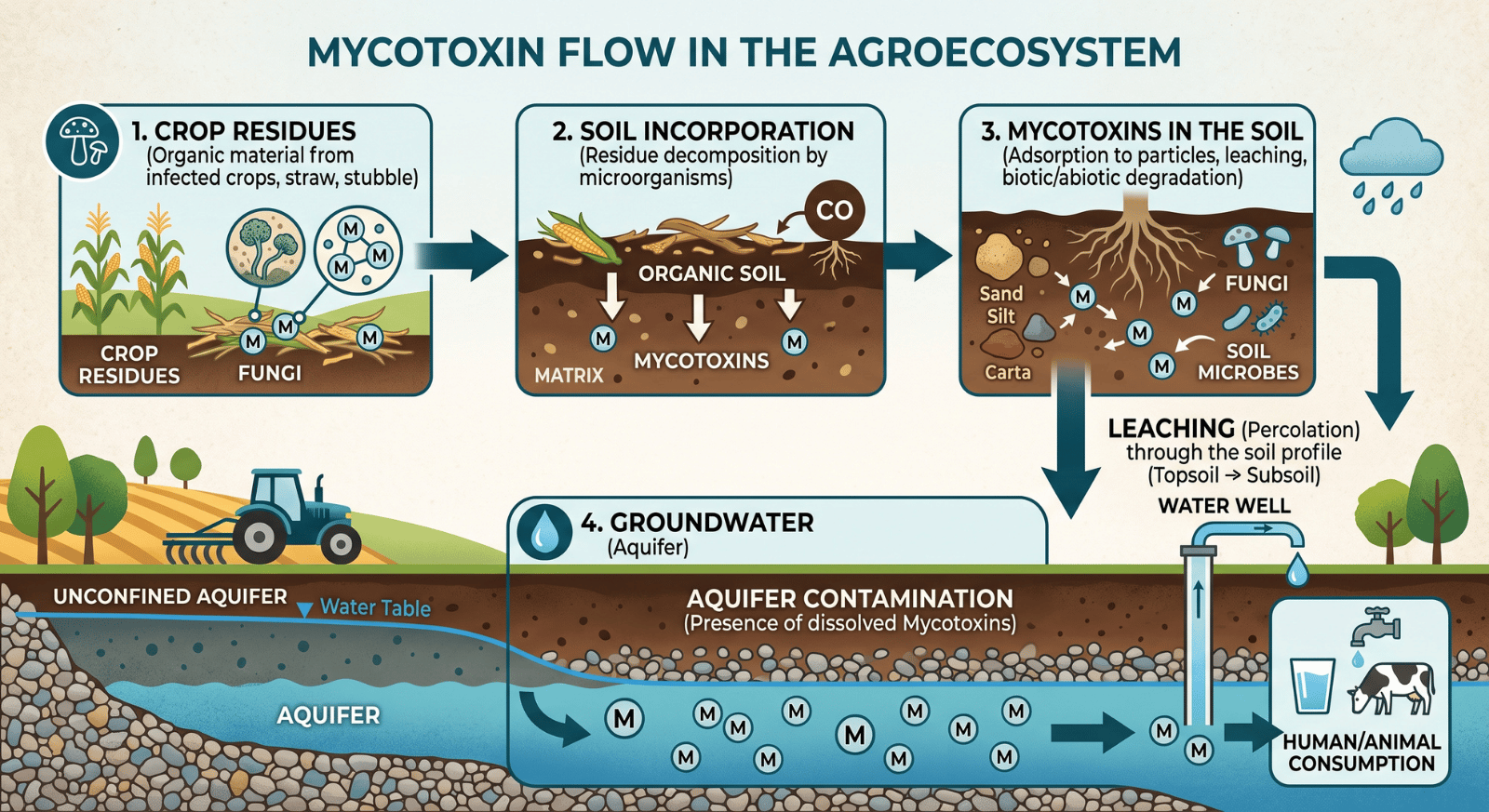
Figure 1. Mycotoxin flows and filtrates into the aquifer.
Conclusion
Soil acts as a dynamic environmental buffer, retaining and releasing mycotoxins into hydrological networks. While crop residues represent the main entry point, soil texture and organic matter dictate whether toxins remain sorbed or migrate into water bodies.
Given the high mobility of soluble trichothecenes and the endocrine-disrupting potential of compounds like ZEN, further field-scale research is essential. Future work must prioritize the long-term aging and stability of bound soil residues, as well as the ecotoxicological impacts of multi-mycotoxin co-occurrence on aquatic and terrestrial biota.