Introduction
An optimal immune response is capable of defending an individual against any pathogen or agent that may pose a threat to its health and systemic integrity. Concurrently, it must operate efficiently and specifically, tailored to the detected threat.
The immune system is responsible for safeguarding the health of living organisms and is influenced by myriad factors. The efficacy of this system determines an individual’s resistance to infectious, viral, or parasitic agents, as well as its capacity to mount an adequate response to vaccination. A robust immune system yields a healthier individual, better equipped to maintain optimal productive efficiency and remain resilient against various environmental and physiological stressors.
However, as with many biological processes, a more potent immune response does not always constitute a superior defensive strategy. This is because immune function entails significant energy expenditure; an excessive or chronic response can induce tissue damage and result in an inefficient allocation of energy. This metabolic burden directly compromises animal development and performance (Broom and Kogut, 2018).
CYTOKINES: Mediators of Inflammation
Cytokines are protein signalling molecules secreted by cells that play a pivotal role in the activation and regulation of cells and tissues during inflammation and the immune response. This group includes interleukins (IL), interferons (IFN), tumour necrosis factors (TNF), transforming growth factors (TGF), migration inhibitory factors, and chemokines, which are structurally smaller (Wigley and Kaiser, 2003).
Interleukin-6 (IL-6) is considered a multifunctional pro-inflammatory cytokine a key role, as it induces the production of acute-phase proteins that subsequently trigger, among other responses, the activation of B and T lymphocytes (Wigley and Kaiser, 2003; Ariadna, 2015).
Tumour necrosis factor-α (TNF-α) is produced primarily by macrophages, T cells and NK cells, T cells, and NK cells, inducing inflammation and endothelial activation. It is associated with febrile processes and, as its name implies, is associated with the development of certain tumours (Wigley and Kaiser, 2003; Weinberg, 2006).
Conversely, interleukin-10 (IL-10) is primarily produced by Th2 cells, alongside interleukins 4 and 5. It acts as an inhibitory compound for activated macrophages and dendritic cells; therefore, it participates in the down-regulation of innate immune reactions and cell-mediated immunity. Consequently, it is classified as an anti-inflammatory cytokine, in contrast to the aforementioned pro-inflammatory cytokines (Ariadna, 2015).
The role of phytogenic compounds in inflammation
In this context, naturally derived phytogenic compounds emerge as a sustainable and effective option for managing inflammation. Specifically, those derived from ingredients such as grapes or olives possess a high, scientifically proven anti-inflammatory capacity (Magrone et al., 2020; Fernandes et al., 2020).
BIŌNTE® QUIMITŌX® LIVŌX®: A Multi-action strategy against productive stress
BIŌNTE® QUIMITŌX® LIVŌX® is a unique combination of phytogenic ingredients, including grape and olive extracts, designed to support the internal health of livestock. This liquid solution has been scientifically formulated to protect various biological barriers against physiological, nutritional and environmental stressors through its potent antioxidant capacity, its beneficial effect on the gastrointestinal tract, and its support of the immune response.
- Antioxidant effect: Its high polyphenol content, particularly proanthocyanidins and hydroxytyrosol, provides a potent capacity to neutralize free radicals generated during oxidative processes. This mitigates the damage these radicals inflict on animals and safeguards the structural integrity of vital organs, such as the liver.
- Intestinal health enhancer: Its formulation contributes to microbiota homeostasis by inhibiting the overproliferation of pathogenic microorganisms, thereby optimizing the balance and functionality of the intestinal environment.
- Immune response modulator: Through the anti-inflammatory properties of its ingredients, it downregulates excessive inflammatory reactions within the organism. This contributes to efficient energy management, ultimately achieving superior performance.
The use of this solution is ideal under stressful circumstances that disrupt the standard course of production systems. On one hand, incorporating BIŌNTE® QUIMITŌX® LIVŌX® into drinking water during early developmental phases is key to ensuring proper initial growth, improved batch uniformity, and helping to stabilize the immune response.
Administering BIŌNTE® QUIMITŌX® LIVŌX® during vaccination periods aims to reduce potential vaccine side effects in animals while ensuring vaccine efficacy. On the other hand, in animals exposed to a high load of feed contaminants, such as mycotoxins, BIŌNTE® QUIMITŌX® LIVŌX® contributes to protecting liver and intestinal health, which are the primary target organs for these types of contaminants.
Generally, in individuals challenged by heat stress, dietary changes, transport periods, high stocking densities, or infections, BIŌNTE® QUIMITŌX® LIVŌX® significantly improves the physiological status of terrestrial species. It contributes to overall efficiency by reducing the energy expenditure caused by these metabolic stressors. Its administration helps reduce mortality and culling rates while improving intestinal and hepatic health to ensure superior nutrient assimilation and more consistent performance.
BIŌNTE® QUIMITŌX® LIVŌX®: Proven immunomodulatory capacity in vitro
En colaboración con el centro de investigación Microlab Biotech de la Universidad de Valencia (España), se han evaluado múltiples propiedades de BIŌNTE® QUIMITŌX® LIVŌX®. Concretamente, se ha demostrado su capacidad para modular la respuesta inflamatoria en un modelo intestinal in vitro, basado en un co-cultivo de células Caco-2 y THP-1 (Figura 1).
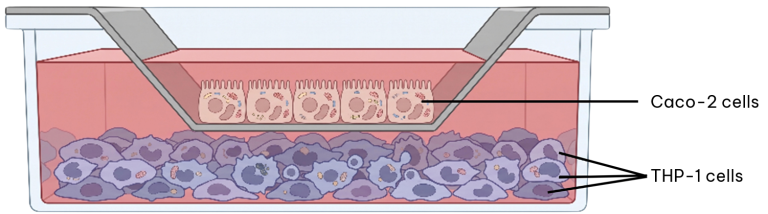
Figure 1. Intestinal co-culture model of Caco-2 and THP-1 cells.
The culture was maintained at 37°C for 48 hours, and the BIŌNTE® QUIMITŌX® LIVŌX® (BQL) product was added at a dose of 100 μL. Additionally, the study included Salmonella spp. and E. coli as inflammation-inducing agents, specifically incorporating 10 CFU/g of both. The overall experimental design consisted of four treatments, as follows:
- Negative control: without inflammation or treatment.
- Inflammation control: induction of inflammation (Salmonella and E. coli 10 CFU/g) and analysis.
- Standard treatment BQL: induction of inflammation, 24 hour incubation, addition of BIŌNTE® QUIMITŌX® LIVŌX®, and analysis.
- Preventive treatment BQL: addition of BIŌNTE® QUIMITŌX® LIVŌX®, 24 hour incubation, induction of inflammation, and analysis.
Through this experimental design, the efficacy of BIŌNTE® QUIMITŌX® LIVŌX® against inflammation was validated, not only as a standard treatment (C) but also as a preventive treatment (D). This latter approach is of particular interest, considering that the administration of BIŌNTE® QUIMITŌX® LIVŌX® is optimal not only during exposure to the stressor or circumstance, but also prior to it, given situations such as vaccination, transport, or dietary changes, among others.
Regarding the parameters monitored across the different treatments, the production of two pro-inflammatory cytokines, interleukin-6 and tumour necrosis factor-α; and one anti-inflammatory cytokine, interleukin-10, was evaluated.
In vitro results of BIŌNTE® QUIMITŌX® LIVŌX®
The results obtained demonstrated the capacity of BIŌNTE® QUIMITŌX® LIVŌX® to mitigate inflammation in the cell model used, due to its formulation based on potent phytogenic extracts derived from olive and grape.
Regarding IL-6, the addition of BIŌNTE® QUIMITŌX® LIVŌX® after inducing inflammation (C) achieved an 85% reduction, decreasing from approximately 60 ng/mL to 9 ng/mL. Equally effective, the preventive inclusion of BIŌNTE® QUIMITŌX® LIVŌX® (D) achieved an 81% reduction, demonstrating a substantial alleviation of inflammation following preventive administration of the liquid solution.
Regarding the TNF-α analysis, both administration strategies of BIŌNTE® QUIMITŌX® LIVŌX® reduced tissue inflammation generated in the model. Treatment C showed a 61% reduction, decreasing from a concentration of 152 ng/mL to 85 ng/mL. With a slightly lower effect, preventive administration (D) reduced the concentration by 33% (Figure 2).
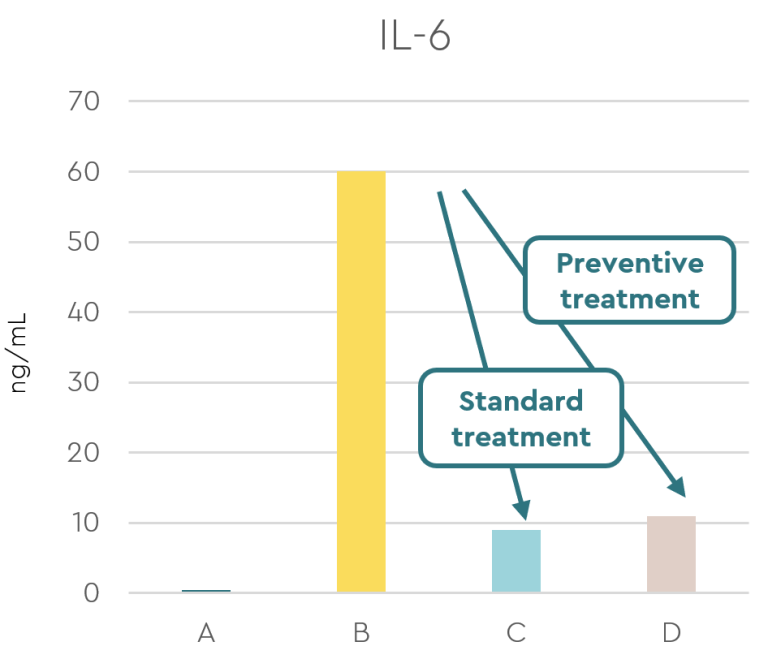
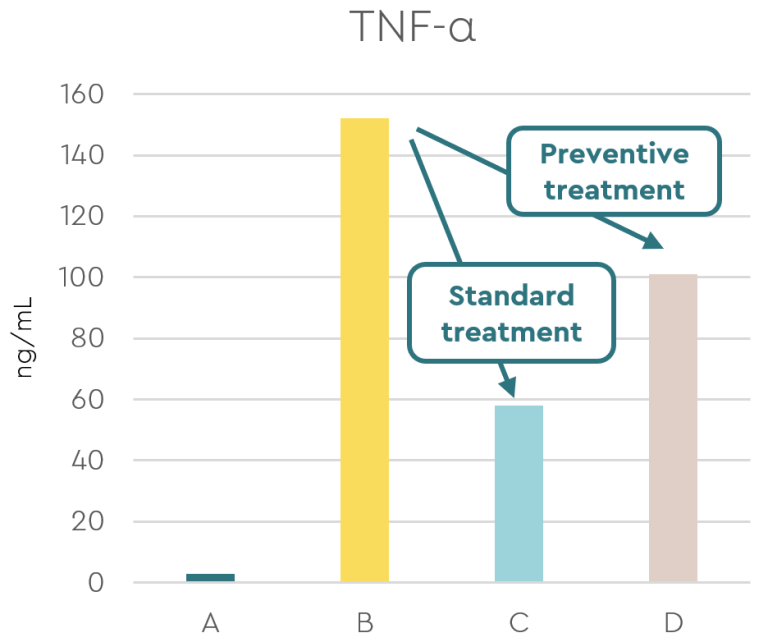
Figure 2. Detection of pro-inflammatory cytokines: interleukin-6 and tumour necrosis factor-α in treatments: A. Negative control, B. Inflammation control, C. Standard treatment BQL, and D. Preventive treatment BQL.
On the other hand, regarding the detected levels of the anti-inflammatory cytokine IL-10, treatment C increased its production by 22% compared with the inflammation control, given that once inflammation was induced, the product contributed to alleviating the existing reaction. In contrast, the preventive administration (D) of BIŌNTE® QUIMITŌX® LIVŌX® resulted in a markedly lower inflammatory response than expected, with IL-10 levels decreasing from 612 ng/mL to 445 ng/mL, which represents a decrease of approximately 27% (Figure 3).
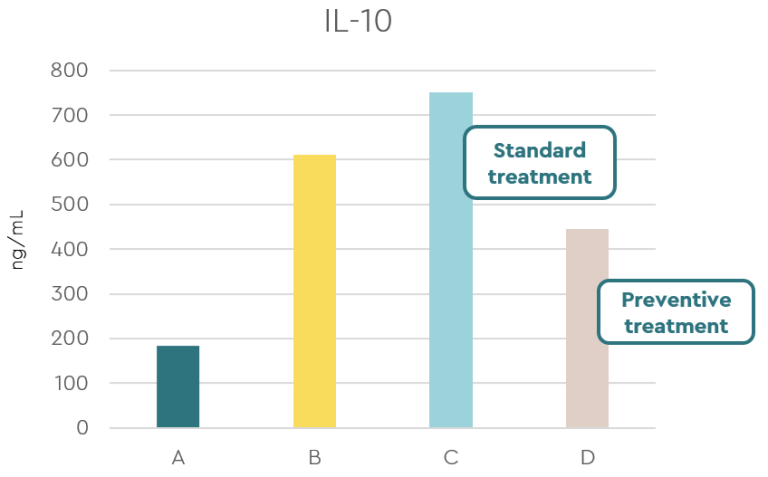
Figure 3. Detection of anti-inflammatory cytokines: interleukin-10 in treatments: A. Negative control, B. Inflammation control, C. Standard treatment BQL, and D. Preventive treatment BQL.
Conclusion
One of the fundamental pillars of animal performance is an efficient immune response. Maintaining adequate resistance to physiological, nutritional and environmental stressors is crucial for sustaining stable and optimal production.
BIŌNTE® QUIMITŌX® LIVŌX® represents as a comprehensive multi-action solution that contributes to this balance, providing systemic health support through its high antioxidant capacity, while also contributing to intestinal and immunological balance.
Based on the in vitro study of its immunomodulatory properties, BIŌNTE® QUIMITŌX® LIVŌX® validates its capacity to regulate excessive inflammatory responses, preventing the tissue damage they cause and ensuring optimal energy utilization in production animals.