Introduction
Swine are among the species most sensitive to the clinical effects of mycotoxins. The oxidative stress induced by these metabolites leads to alterations in the gut microbiota, impairing digestive efficiency and hindering the absorption of essential nutrients (Grosu et al., 2023). Pigs commonly present with digestive disorders, including vomiting and diarrhoea; these signs, together with reduced appetite and poorer feed conversion, result in impaired growth performance (Nikolov et al., 2023; Muñoz-Solano et al., 2023).
Furthermore, mycotoxins may affect other organ systems, leading to respiratory and reproductive disorders and compromising both fertility and piglet viability. Feed may be colonised by different fungal species, which can in turn produce a range of mycotoxins (Kanora et al., 2009). Consequently, simultaneous contamination of feed with multiple mycotoxins is common, representing a significant risk factor (Muñoz-Solano et al., 2023).
Aflatoxins
Pigs are highly susceptible to aflatoxins, especially those animals in the early stages of their development. Acute exposure to aflatoxin B1 (AFB1) may induce depression and anorexia in pigs, with the liver being the most severely affected organ (Popescu et al., 2022; Mallmann et al., 2011).
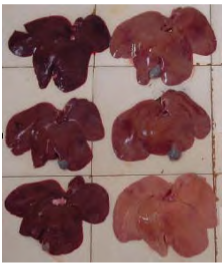
Image 1. Left: livers of healthy animals.
Right: yellowish, enlarged livers from intoxicated animal (Mallmann et al., 2011).
The presence of aflatoxins in feed leads to digestive disturbances in swine, with clinical signs such as diarrhoea. Affected pigs show reduced appetite and feed intake, resulting in growth retardation and reduced uniformity in body weight within the group (Zhang et al., 2022).
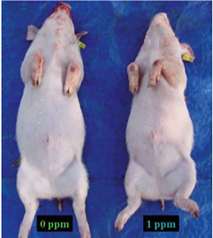
Image 2. Left: healthy animal.
Right: growth retardation in a piglet (Mallmann et al., 2011).
The marked hepatotoxic effects of this mycotoxin also impair immune function, leading to immunosuppression. In some cases, exposed pigs may exhibit reproductive alterations, and increased mortality at farm level has also been reported (Popescu et al., 2022).
Deoxynivalenol
Deoxynivalenol (DON) is primarily associated with digestive disturbances in swine, including vomiting and diarrhoea, as well as feed refusal and impaired performance (Ogunade et al., 2018; Mallmann et al., 2011).
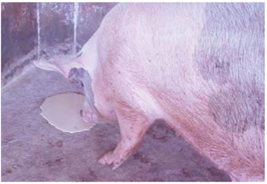
Image 3. Vomiting (Mallmann et al., 2011).
DON disrupts the gastrointestinal barrier by damaging epithelial cells and increasing intestinal permeability, thereby impairing nutrient absorption (Pinton et al., 2009). In addition, DON exerts hepatotoxic effects, triggering inflammatory responses and apoptosis, which may ultimately result in immunosuppression (Hasuda et al., 2022).
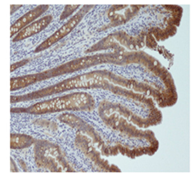
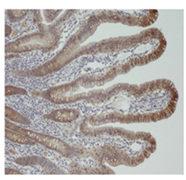
Image 4. Left: histological image of the jejunum in a healthy animal.
Right: intoxicated animal showing increased permeability of the intestinal epithelium (Pinton et al., 2009).
The presence of DON in feed increases the susceptibility of animals to secondary infections. In addition, in cases of acute exposure, neurological signs may occur, including limb paralysis (Panisson et al., 2023).
Zearalenone
Swine are considered the species most susceptible to the effects of zearalenone (ZEN), particularly females, in which the reproductive system is primarily affected (Liu et al., 2020). ZEN is associated with reproductive disorders in swine, including reduced fertility, pseudopregnancy, embryonic resorption, abortion and decreased litter size (Ogunade et al., 2018; Nikolov et al., 2023).
It also induces alterations in the mammary glands and affects foetal development, with consequent impact on the viability of newborn piglets. In some exposed piglets, inflammation and oedema of the vulva may be observed, as well as cases of splay leg syndrome, in which piglets are unable to maintain a normal posture of the hind limbs and may require euthanasia (Ogunade et al., 2018; Nikolov et al., 2023).
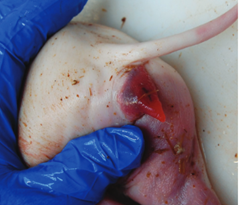
Image 5. Swelling and redness of the vulva in piglet (VetRecord, 2024).
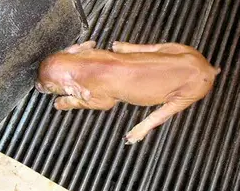
Image 6. Splay leg syndrome in piglet (Trujano, 2021).
Affected sows may develop vaginal, uterine and rectal prolapse. In addition, an increase in the size of the reproductive organs has been observed compared with healthy females (Ogunade et al., 2018; Nikolov et al., 2023).
In males, zearalenone induces feminisation processes, with clinical signs such as gynecomastia, leading to reduced libido and impaired fertility. In addition, these mycotoxins exert hepatotoxic and genotoxic effects in swine (Nikolov et al., 2023; Trujano, 2021).
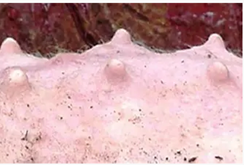
Image 7. Gynecomastia in young male (Trujano, 2021).
Ochratoxins
Ochratoxin A (OTA) is the most toxicologically significant of the ochratoxins. Its primary effect in swine is impairment of renal function, and it is also associated with reduced growth rate (Tassis et al., 2024; Ceci et al., 2007).
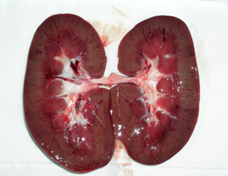
Image 8. Kidney lesions: enlargement of the renal pelvis and hyperaemic cortex (Bozzo et al., 2012).
Renal damage induced by OTA leads to increased water consumption and may result in haematuria. In addition, affected animals show a general deterioration in condition, with reduced feed intake, thereby compromising growth (Ceci et al., 2007; Mallmann et al., 2011).
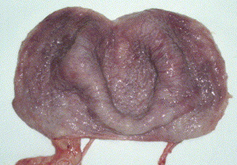
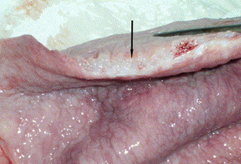
Image 9. Left: bladder with thickened and hyperemic mucosa.
Right: wall thickening (Ceci et al., 2007).
Ochratoxins also exert hepatotoxic effects and induce gastrointestinal disturbances. They lead to immunosuppression in swine, increasing susceptibility to secondary diseases and infections. Consequently, their presence in feed may result in increased mortality at farm level (Stoev et al., 2013).
Fumonisins
Fumonisins primarily affect the cardiovascular system in swine and are considered the main cause of porcine pulmonary oedema (PPE) syndrome. In its early stages, this syndrome is characterised by apathy and prostration (A), progressing to severe respiratory distress (B, C, D) and, in advanced cases, death (E) (Mallmann et al., 2011; Zeebone et al., 2023).
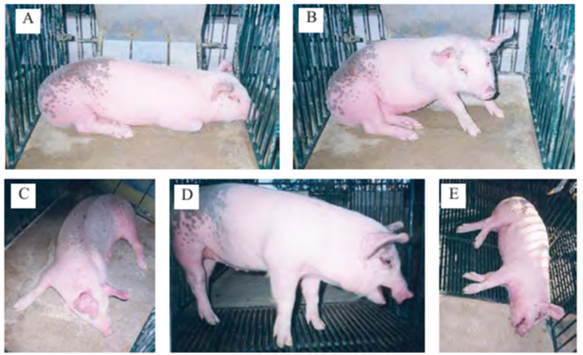
Image 10. Clinical progression of pigs with pulmonary oedema (Mallmann et al., 2011).
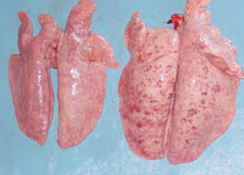
Image 11. Left: lungs from a healthy pig.
Right: pulmonary oedema in a pig (Mallmann et al., 2011).
Growth performance is also adversely affected by fumonisins. Pigs show reduced feed intake and an increased feed conversion ratio. They also exhibit disruption of the gastrointestinal barrier and microbiota dysbiosis, leading to clinical signs such as diarrhoea (Terciolo et al., 2019).
In addition, these mycotoxins exert hepatotoxic and nephrotoxic effects, inducing marked immunosuppression. Lipid metabolism in swine is also affected due to the structural similarity between fumonisins and sphingolipids (Haschek et al., 2001; Mallmann et al., 2011).
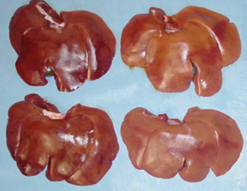
Image 12. Left: livers from healthy pigs.
Right: liver damage in intoxicated pigs (Mallmann et al., 2011).
T-2 toxin
Swine are highly susceptible to the toxic effects of T-2 toxin, a trichothecene mycotoxin commonly found together with its main metabolite, HT-2 toxin.
T-2 toxin has been associated with feed refusal in swine, resulting in reduced weight gain. It induces diarrhoea and triggers cutaneous reactions. In particular, contact with feed or faeces contaminated with this mycotoxin has been reported to cause irritation in areas such as the snout, ears, oral mucosa and perineal region; in severe cases, necrotic lesions may develop (Janik et al., 2021; Mallmann et al., 2011).
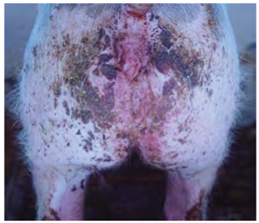
Image 13. Skin irritation following contact with contaminated diarrhoea (Mallmann et al., 2011).
In addition, T-2 toxin induces marked immunosuppression due to its interference with protein synthesis, leading to alterations in cell membranes. It also compromises the intestinal barrier in pigs and triggers inflammatory responses (Wojtacha et al., 2021).
Conclusion
Mycotoxins have significant effects on swine, causing serious health problems that worsen their performance and compromise their well-being. These compounds result in significant economic, health and commercial losses, and that is why effective plans and strategies must be drawn up to deal with their effects and control their impact.