Swine are among the most susceptible livestock to the toxic effects of mycotoxins. These contaminants, present naturally in raw materials and compound feed, induce systemic toxicity, compromising overall health and performance. In swine production, one of the most prominent mycotoxins is zearalenone (ZEN), widely recognized for its significant impact on the productivity of breeding sows.
ZEN is a non-steroidal mycotoxin with estrogenic effects of particular concern for this class of livestock. Monogastric animals are known to metabolize this mycotoxin primarily in the liver and intestinal mucosa. Specifically, swine produce a higher proportion of the modified form α-zearalenol (α-ZEL) via hepatic metabolism (Malekinejad et al., 2005). Consequently, pigs exhibit high sensitivity to this mycotoxin, as this modified form displays a high affinity for estrogen receptors, proving even more potent than ZEN itself (Tiemann and Dänicke, 2007; Teixeira et al., 2011).
The reduction of the 6-keto group and the vinyl groups in its molecule accounts for the higher binding affinity of α-ZEL to the estrogen receptor, just as it explains why the β-ZEL epimer is substantially less active (Kuiper-Goodman et al., 1987). This metabolite can bind to estrogen receptors in target tissue cells, dysregulate the expression and synthesis of related genes and proteins, and exert reproductive toxicity (Wu et al., 2021).
Females are particularly sensitive to the toxic effects of ZEN, suffering mainly from reproductive alterations (Liu et al., 2020). This toxin is known to cause a decrease in the number of corpora lutea, a reduction in ovarian weight, fewer viable embryos, an increased rate of stillborn piglets, and the occurrence of abortions (Tiemann and Dänicke, 2007; Ogunade et al., 2018; Nikolov et al., 2023).
Furthermore, alterations in the mammary glands, prolapses, and fetal development issues occur, which can impair the viability of newborn piglets. Vulvar edema and inflammation are observed in newborn piglets, alongside cases of Splay leg, a syndrome that prevents piglets from maintaining a normal position in their hind limbs (Ogunade et al., 2018; Nikolov et al., 2023).
In particular, prepubertal gilts prior to their first estrus are highly susceptible to these effects of ZEN, potentially developing clinical signs such as vulvar edema and erythema, as well as impaired ovulation, conception, implantation, fetal development, and newborn viability (Tiemann and Dänicke, 2007). Prepubertal gilts therefore receive special attention, with numerous studies focusing on ZEN toxicity in this specific productive stage.
In this context, the efficacy of BIŌNTE® QUIMITŌX® PLUS was evaluated in prepubertal gilts. This multi-action anti-mycotoxin solution mitigates the toxicity of these contaminants through three modes of action: adsorption, bioprotection, and a postbiotic effect. Thanks to its formulation, comprising rigorously selected clays, high-purity phytogenic extracts, and yeast derivatives, this solution had previously demonstrated in vitro efficacy against ZEN and its modified forms.
The present study validated the efficacy of BIŌNTE® QUIMITŌX® PLUS in prepubertal gilts exposed to high levels of ZEN for 21 days. Conducted in collaboration with the Samitec Institute (Brazil), the study demonstrated both the toxic effects of this mycotoxin in animals and the efficacy of the anti-mycotoxin solution in mitigating them.
Experimental design
A total of 64 prepubertal nulliparous sows with an average body weight of 8.58 kg were included, receiving food and water ad libitum throughout the 21-day experimental period. The control diet used in the study was analyzed to guarantee the absence of mycotoxins and to introduce ZEN artificially and in a controlled manner. The animals were assigned to three experimental groups:
| Experimental Group | ZEN level | BIŌNTE® QUIMITŌX® PLUS |
| Negative control | – | – |
| Positive control | 1200 ppb | – |
| Treatment | 1200 ppb | 5 kg/ton |
Table 1: Experimental groups.
The ZEN concentration used was 1200 ppb, which is considered a high-risk level for the individuals. Accordingly, the inclusion dose of BIŌNTE® QUIMITŌX® PLUS was 5 kg/ton, representing a high dose appropriate for the challenge presented in this specific study.
The controls performed for product validation included productive parameters as well as morphometric and reproductive anatomy measurements of the females. These allowed for the evaluation of the effects of both the mycotoxin and the product on performance, sexual development, pubertal maturity, and reproductive health of the sows.
BIŌNTE® QUIMITŌX® PLUS: Proven efficacy
Regarding performance controls, the recorded results were consistent with those reported by Wu et al. (2020) concerning ZEN toxicity. As previously described, this mycotoxin is primarily associated with harmful reproductive effects, rather than interference with growth parameters.
In this context, the present study demonstrates that exposure to the contaminated diet reduced weight gain and feed intake in the animals; however, this did not constitute a statistically significant alteration. In any case, it is noteworthy that this performance reduction caused by ZEN exposure was mitigated by the administration of BIŌNTE® QUIMITŌX® PLUS.
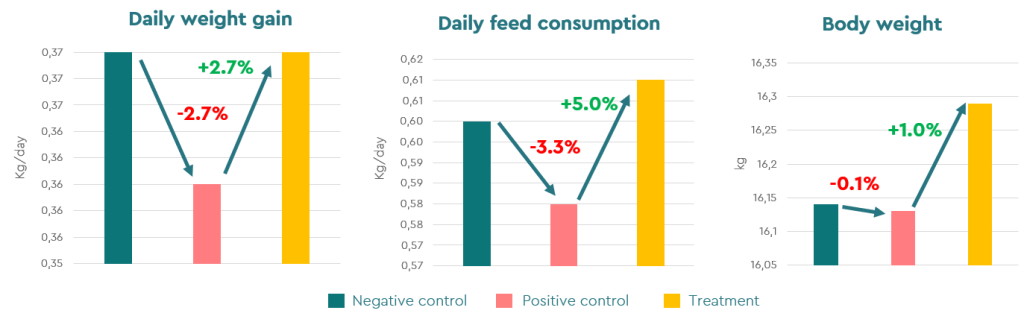
Figure 1: Productive parameters in prepubertal gilts from the negative control, positive control, and treatment groups.
Vulvar volume was monitored throughout the entire experimental period, including measurements on days 11, 16, and 21, which showed a progressive increase in vulvar size during the trial (Figure 2). The estrogenic activity of ZEN disrupts normal hormone levels and interferes with the expression of target genes. This interaction triggers severe local vasodilation and increases vascular permeability in the microcirculation of the vulva. Consequently, a massive extravasation of plasma into the tissue stroma occurs, causing edema, capillary congestion, and hyperplasia of the superficial epithelium, culminating in swelling, redness, and a visible increase in vulvar volume (Lv et al., 2025; Yang et al., 2018; Fink-Gremmels and Malekinejad, 2007).
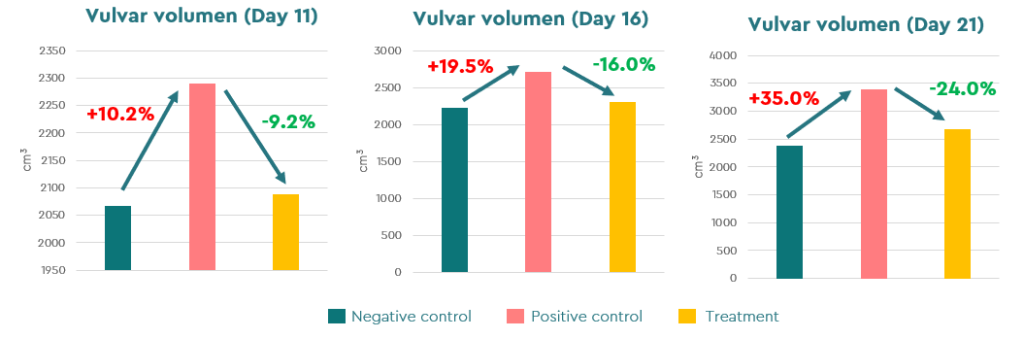
Figure 2: Vulvar volume monitoring throughout the experimental period in prepubertal gilts from the negative control, positive control, and treatment groups.
This effect of ZEN difficult the accurate detection of estrus and effective insemination. It can dramatically increase the non-productive days of sows, delay the entry into production of replacement gilts, or cause premature culling due to suspected infertility.
For its part, BIŌNTE® QUIMITŌX® PLUS counteracted this toxicity through its multiple mechanisms of action. Its adsorbent properties, combined with its postbiotic and bioprotective effects, mitigate vulvar inflammation and edema, maintaining its physiological volume and preventing ZEN exposure from negatively impacting the reproductive performance of the sows.
Complementarily, various post-mortem measurements were conducted, including the reproductive tract, myometrium, endometrium, and uterine horn wall. Regarding the length and relative weight of the reproductive tract, an increase of 4.69 cm and 0.04%, respectively, was recorded (Figure 3). This increase is a consequence of the structural remodeling and uterine tissue hypertrophy induced by ZEN. At the cellular level, this mycotoxin promotes the abnormal survival of certain cells, leading to hypertrophy and hyperplasia in the uterine walls. The accumulation of cellular biomass, combined with fluid retention from congestion and an inflammatory response, increases the total mass and length of the reproductive tract (Yang et al., 2018; Lv et al., 2025).
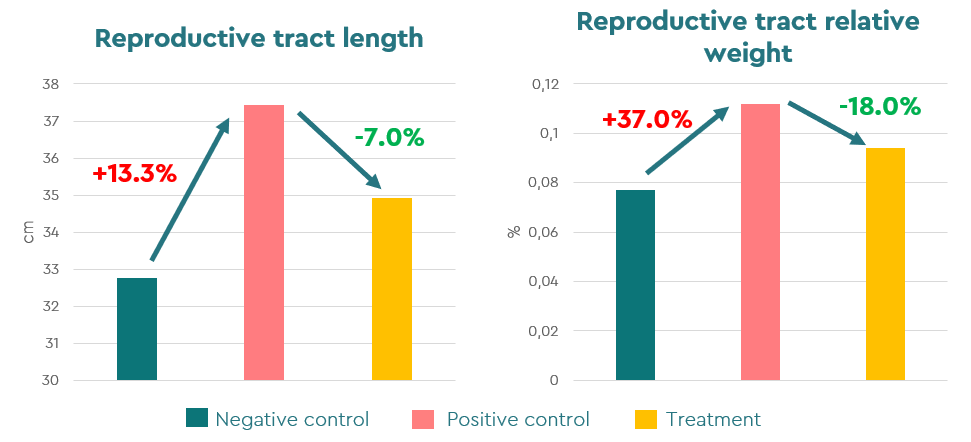
Figure 3: Length and relative weight of the reproductive tract in prepubertal gilts from the negative control, positive control, and treatment groups.
BIŌNTE® QUIMITŌX® PLUS demonstrated its efficacy in controlling the effects of ZEN on the reproductive tract, counteracting the increase in its length and weight. Thanks to supplementation, these parameters remained within physiological ranges, without interfering with the productive performance of the animals.
Finally, exposure to ZEN caused uterine hypertrophy, increasing the thickness of the endometrium by 177 µm, the myometrium by 45 µm, and the uterine horn wall by 225 µm (Figure 4). Directly related to the mechanisms described above, the specific thickening of these uterine layers is due to a combination of inflammatory infiltration and tissue proliferation generated by ZEN. In the inner mucosal layer (endometrium), ZEN alters microcirculation by increasing the number of erythrocytes in endometrial capillaries and triggering a local inflammatory response with epithelial thickening and extravascular edema. Concurrently, in the outer muscular and structural layers (myometrium and uterine horn wall), it stimulates hypertrophy and proliferation of smooth muscle and connective tissue (Lv et al., 2025; Yang et al., 2018; Fink-Gremmels and Malekinejad, 2007).
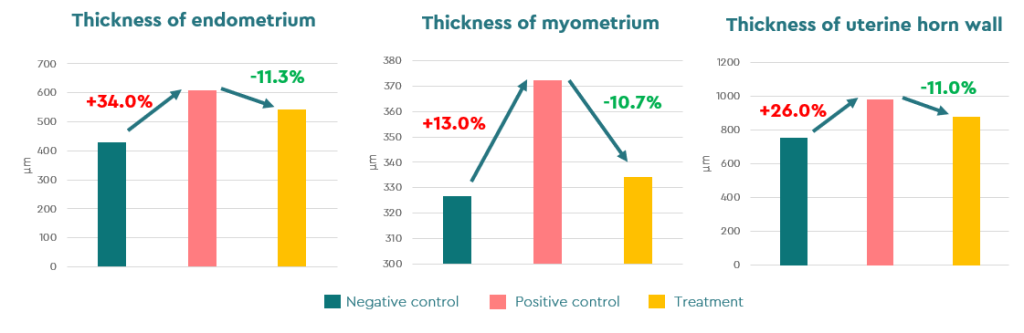
Figure 4: Endometrium, myometrium, and uterine horn wall thickness in gilts from the negative control, positive control, and treatment groups.
BIŌNTE® QUIMITŌX® PLUS reduced the effects of ZEN on the thickness of the endometrium, myometrium, and uterine horn wall, decreasing them by 65 µm, 38 µm, and 103 µm, respectively. This effect is crucial for the reproductive performance of sows, as endometrial inflammation and vascular alteration compromise embryo implantation, increasing the rate of resorptions, abortions, premature farrowing, and the birth of weak or stillborn piglets, drastically reducing the number of weaned piglets per sow.
Conclusion
Zearalenone (ZEN) represents a direct threat to the profitability of swine farms due to its marked hyperestrogenic action, which alters the tissue architecture of the reproductive tract and compromises sow health.
As demonstrated by this in vivo study, exposure to critical ZEN levels (1200 ppb) triggers morphometric alterations that compromise embryo implantation, dramatically increasing non-productive days, and reducing the number of weaned piglets. The addition of BIŌNTE® QUIMITŌX® PLUS has proven to be a highly effective strategy to neutralize these toxic effects.
Thanks to its triple mechanism of action (adsorption, bioprotection, and postbiotic effect), the product prevents tissue inflammation and maintains reproductive and histological parameters within normal physiological ranges, thereby protecting the productive potential and economic investment of the farm.