Introduction
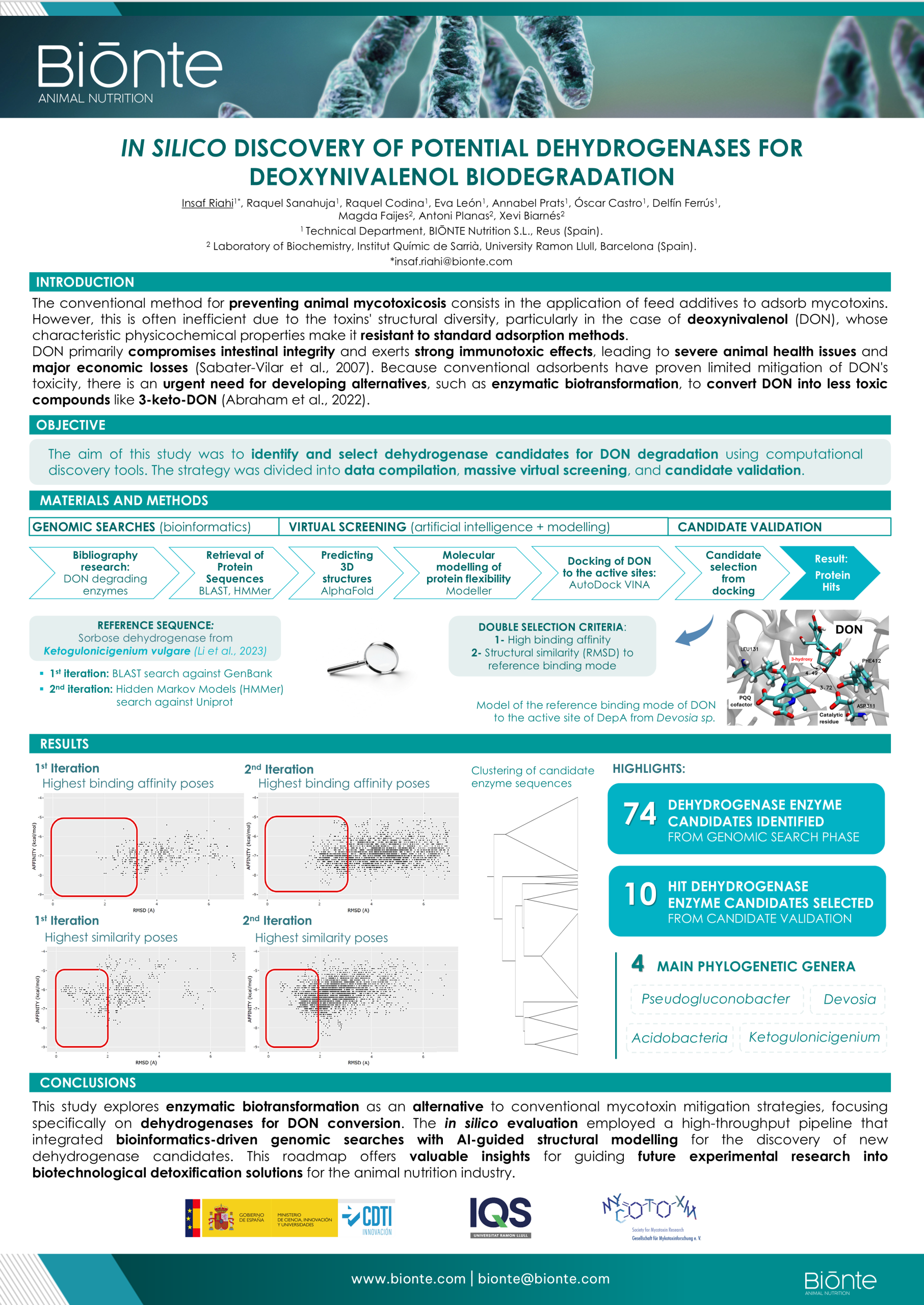
The conventional method for preventing animal mycotoxicosis consists in the application of feed additives to adsorb mycotoxins. However, this is often inefficient due to the toxins’ structural diversity, particularly in the case of deoxynivalenol (DON), whose characteristic physicochemical properties make it resistant to standard adsorption methods.
DON primarily compromises intestinal integrity and exerts strong immunotoxic effects, leading to severe animal health issues and major economic losses (Sabater-Vilar et al., 2007). Because conventional adsorbents have proven limited mitigation of DON’s toxicity, there is an urgent need for developing alternatives, such as enzymatic biotransformation, to convert DON into less toxic compounds like 3-keto-DON (Abraham et al., 2022).
Objective
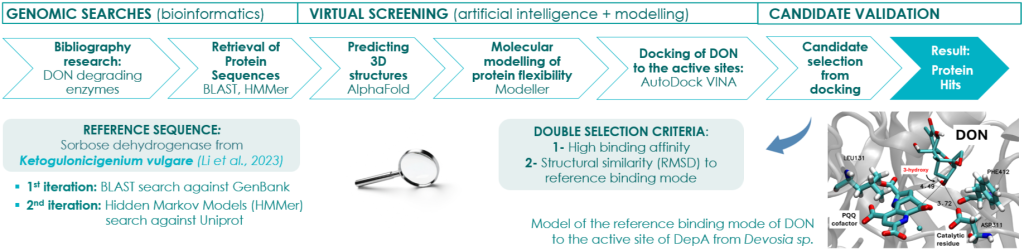
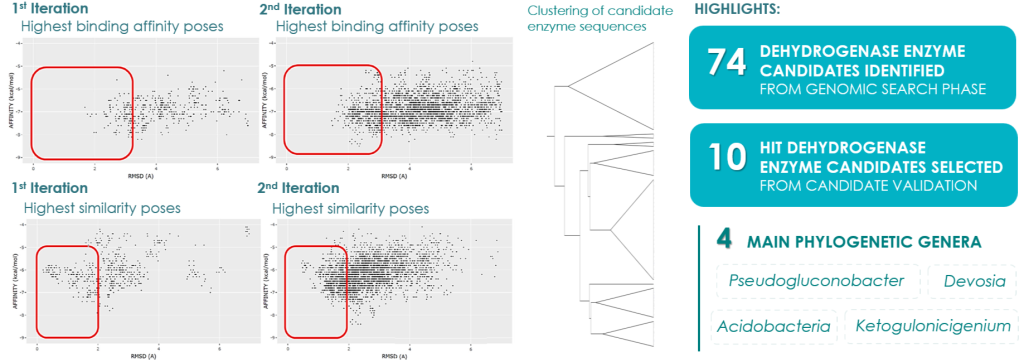
The aim of this study was to identify and select dehydrogenase candidates for DON degradation using computational discovery tools. The strategy was divided into data compilation, massive virtual screening, and candidate validation.
Materials and methods
Results
Conclusions
This study explores enzymatic biotransformation as an alternative to conventional mycotoxin mitigation strategies, focusing specifically on dehydrogenases for DON conversion. The in silico evaluation employed a high-throughput pipeline that integrated bioinformatics-driven genomic searches with AI-guided structural modelling for the discovery of new dehydrogenase candidates. This roadmap offers valuable insights for guiding future experimental research into biotechnological detoxification solutions for the animal nutrition industry.