Introduction
The safety and quality of feed for poultry is a crucial aspect of the poultry industry. Contamination of feed by mycotoxins poses significant challenges, affecting both the health and welfare of the poultry, as well as their performance.
Poultry are widely affected by these toxic compounds, and, although the focus is usually placed on broiler chickens or laying hens, ducks are one of the most susceptible poultry species to mycotoxin toxicity (An et al., 2024, Sobhy et al., 2023).
Aflatoxins
Ducks are the most susceptible poultry species to aflatoxins (Sobhy et al., 2023). Aflatoxins are mycotoxins produced by fungi of the Aspergillus and Penicillium genera. The most toxic mycotoxin within this group is aflatoxin B1 (AFB1), which has been included in Group 1 of the World Health Organization (WHO) due to its carcinogenicity (Yu et al., 2024).
Corn, which constitutes the main energy source in duck feed, is highly vulnerable to AFB1contamination. Aflatoxins have been documented to cause damage to the gastrointestinal tract of ducks, negatively affecting intestinal function and the activity of digestive enzymes such as amylase and lipase. At high doses, it can cause a malabsorption syndrome and compromise the efficiency of nutrient utilization. Furthermore, it is associated with alterations in the immune function of these animals (Feng et al., 2017).
Exposure to a diet contaminated with aflatoxins causes a significant decrease in duck body weight, as well as reduced growth rate (Image 1) and absolute weight of the liver and gizzard, along with an increase in feed intake and a poor feed conversion ratio (FCR). Post-mortem evidence of hemorrhages in the liver, kidney, and thigh muscles has also been observed (Sobhy et al., 2023).
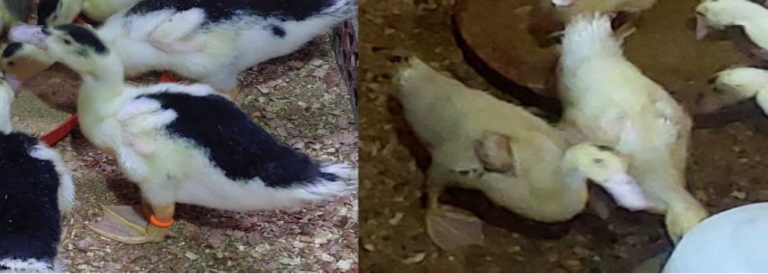
Image 1. Decrease in growth rate in ducks fed a diet contaminated with aflatoxins (right) compared to the control group (left) (Sobhy et al., 2023).
AFB1 causes marked hepatic damage, with a significant increase in serum levels of aspartate aminotransferase (AST) and alanine aminotransferase (ALT). This promotes cellular swelling and lipid accumulation in the liver (fatty liver). Furthermore, AFB1 induces hepatic cholestasis in ducks, visible as a greenish color in the liver (Image 2). This is due to AFB1 significantly increasing the total bile acid content in the serum and liver, and downregulating crucial genes for bile salt export. AFB1 also causes oxidative stress, decreasing hepatic antioxidants and elevating malondialdehyde (MDA) levels, a product of lipid peroxidation (Yu et al., 2024).
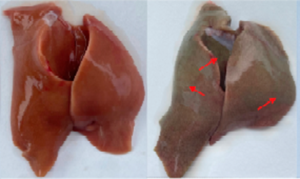
Image 2. Duck liver affected by AFB1. Left: healthy liver; right: liver with cholestasis (red arrows) due to AFB1 (Yu et al., 2024).
Ochratoxin A
Ochratoxins are produced by various fungi of the Aspergillus and Penicillium genera (Ruan et al., 2023). These mycotoxins are classified into three types: ochratoxin A (OTA), B (OTB), and C (OTC), with OTA being the most toxic, having a marked renal effect. Sensitivity to OTA varies among animal species and is associated with chronic kidney diseases.
Exposure to OTA in ducks has severe consequences on productive performance, causing a significant reduction in final body weight, daily feed intake, and average daily gain, thereby altering the feed-to-gain ratio. OTA exerts significant enterotoxicity, visible in the jejunum, with villus blunting and epithelial denudation, which is evidenced by a decrease in villus height and an increase in crypt depth (Ruan et al., 2018).
Tansakul et al., (2012) reported hematological and serum biochemical profile alterations in ducks exposed to OTA. They also suggested a possible immunosuppressive effect of the mycotoxin and determined histopathological alterations in the renal cells of exposed animals. On the other hand, Wang et al., (2019) reaffirmed hepatic toxicity of this mycotoxin in ducks, in addition to demonstrating an alteration in the composition and structure of the intestinal microbiota.
It is also known that OTA is a potent inducer of oxidative stress and inflammation, significantly increasing the MDA content in the jejunal mucosa and reducing the activity of antioxidant enzymes (Ruan et al., 2018).
Fumonisins
Fumonisins are sphingosine analogue compounds that produce imbalances in sphingolipid synthesis. Thus, as in other poultry, the sphinganine/sphingosine ratio (Sa:So) and sphinganine (Sa) levels constitute a biomarker of exposure in ducks (Peillod et al., 2021). Fumonisins accumulate in the liver and generate oxidative stress. Specifically, turkeys and ducks have been reported to be more sensitive to these mycotoxins than other production poultry.
Tran et al., (2005) reported a reduction in the body weight of ducks exposed to fumonisin B1 (FB1), indicating a negative effect on their growth (Image 3). Furthermore, alterations in the relative weight of organs were observed, particularly in the liver, where hyperplasia, with or without fat accumulation, was detected, suggesting liver damage associated with exposure to this mycotoxin.
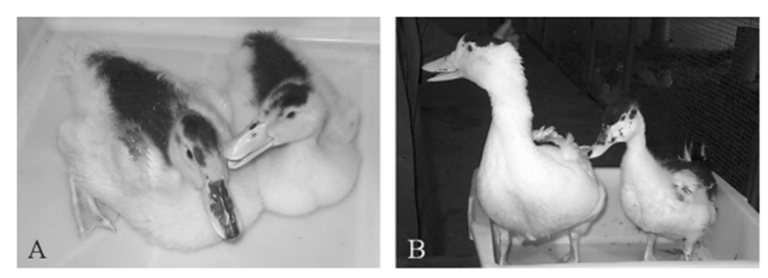
Image 3: Effect of FB1 on body weight of ducks, exposed to a dose of:
0 mg of FB1/kg diet (animal on the left) and 128 mg of FB1/kg diet (animal on the right).
A: after 14 days; B: after 35 days of treatment.
Image taken from Tran et al., 2005.
FB1 causes developmental delay and abnormalities, such as neural tube defects (NTDs) and craniofacial defects. Its main toxicity mechanism is the interference with sphingolipid metabolism, as FB1 is a potent inhibitor of ceramide synthase. This results in a decrease in sphingomyelin content in embryonic tissues at high doses (Lumsangkul et al., 2021).
Zearalenone
Zearalenone (ZEN) is a mycotoxin produced by Fusarium fungi that is commonly found in cereals and animal feed (Bencze-Nagy et al., 2023; Peillod et al., 2021).
Although it has been widely studied in other poultry like chickens and turkeys, its toxicity and specific effects in ducks are not yet completely characterized. However, it is known to be intrinsically linked to its structural similarity with estrogenic hormones, which allows it to bind to estrogenic receptors (Bencze-Nagy et al., 2023; Peillod et al., 2021). This can alter hormonal balance, affect fertility, and cause changes in the development of reproductive organs (Peillod et al., 2021).
In addition to its effects on the reproductive system, ZEN can induce modifications in the function of certain liver enzymes, cause liver lesions, and has been reported to increase lipid peroxidation (Bencze-Nagy et al., 2023).
Bencze-Nagy et al., (2023) reported that ducks show tolerance to moderate concentrations of ZEN (0.5 mg/kg) administered alone, displaying no mortality, clinical signs, or significant alterations in productive performance or serum biochemical parameters. Despite the clinical tolerance, ZEN induces mild histopathological lesions, which include: vacuolar degeneration of hepatocytes and lymphocyte depletion in the spleen and bursa of Fabricius.
It is known that the most notable effect of ZEN in ducks occurs in combination with other fusariotoxins. This combination causes a significant decrease in body weight and daily weight gain, along with an increase in the feed conversion ratio, suggesting a synergistic interaction in performance (Peillod et al., 2021).
T-2 toxin
Trichothecenes include the T-2 toxin, generated by fungi of the Fusarium genus, which is part of the type A trichothecenes. In general, dermatological signs have been detected in poultry exposed to feed with high concentrations of trichothecenes, including inflammation and necrosis (Gómez-Verduzco et al., 2023).
Exposure to T-2 translates into a marked deterioration of productive performance. An in vivo study conducted by An et al., (2024) reported significant hepatic damage evident in histology (such as steatosis and loss of hepatic cords) in ducks exposed to T-2 toxin. Furthermore, the animals showed growth alterations, changes in biochemical parameters, including an increase in liver enzymes (AST, ALT), triglycerides, and oxidative stress. These results confirmed the toxicity of T-2 toxin exerted on lipid metabolism and the redox balance of ducks.
At the intestinal level, the toxin causes enterotoxicity in the ileum, damaging the physical barrier and inducing microbiota dysbiosis (An et al., 2025). This intestinal damage allows the translocation of lipopolysaccharides (LPS) to the liver, activating the TLR4 pathway, which amplifies inflammation and hepatic lipid accumulation (An et al., 2025).
At the immunological level, T-2 toxin is a potent immunosuppressant, causing lymphocyte depletion in the bursa of Fabricius and the spleen at high doses, and even depressing the blastogenic response of lymphocytes at the lowest dose studied (Rafai et al., 2000).
Deoxynivalenol
Deoxynivalenol (DON) is a very common fusariotoxin in cereals and feed (Bencze-Nagy et al., 2023). The toxic mechanism of DON involves its binding to ribosomes, which causes ribotoxic stress, inhibition of protein synthesis, modulation of gene expression, and ultimately, cellular toxicity (Bencze-Nagy et al., 2023).
In Muscovy ducks, DON has been related to hepatic and cardiac toxicity, evidenced by an increase in organ weight and internal lesions, detected at the histopathological level. Furthermore, DON exerts an immunotoxic effect in ducks, demonstrated by the reduction in the quantity of macrophages generated by the animals (Cheng et al., 2024).
Despite its cytotoxic mechanism, ducks are considered a fairly tolerant species to moderate dietary concentrations of DON (Bencze-Nagy et al., 2023; Peillod et al., 2021). Studies indicate that ducks can tolerate DON doses of up to 5.8–7 mg/kg without experiencing notable adverse effects on health or productive performance (Bencze-Nagy et al., 2023). It has been suggested that this low sensitivity in poultry might be due to a pronounced “renal first-pass” phenomenon that facilitates the elimination of the toxin (Bencze-Nagy et al., 2023).
Conclusion
The presence of mycotoxins represents a serious threat to duck production. These fungal contaminants trigger severe health alterations, which translate into a marked decline in productive efficiency and a deterioration of animal welfare. Therefore, it is essential to implement rigorous protocols and control measures to mitigate their detrimental effects and effectively manage their impact. Despite the recognized threat posed by mycotoxins, more exhaustive and specific research in duck species is required to fully elucidate their toxicological mechanisms, establish precise safety thresholds, and develop more effective intervention and management strategies.